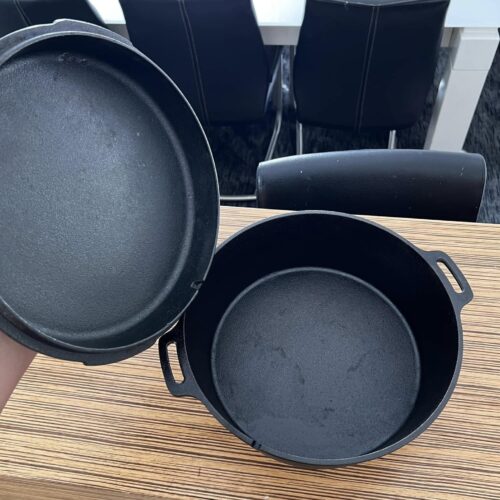
How to Restore Rusty Cast Iron (Vinegar & Baking Soda Method)
A simple, chemical-free method to restore heavily rusted cast iron cookware using household ingredients. This method removes rust, mold, and grime, revealing the bare metal ready for seasoning.
Equipment
- Rusty cast iron pan or dutch oven
- Steel wire brush
- Steel wool (Grade 0 or 00)
- Baking soda
- White vinegar
- Sponge
- Canola oil (for seasoning)
- Paper towels
- Oven
Instructions
- Initial Cleaning: Use a steel wire brush to scrape off loose rust flakes, dirt, and mold. Rinse with water.
- The Scrub: Sprinkle a generous amount of baking soda onto the wet iron. Scrub with a sponge to start breaking up the surface rust.
- Vinegar Reaction: Pour white vinegar over the baking soda (it will fizz). While it is wet, use steel wool to scrub the metal vigorously.
- Repeat: Rinse the sludge away. Repeat the baking soda, vinegar, and steel wool process. You may need to do this 3-4 times depending on the severity of the rust. (This took me about 3 hours for a heavily rusted pot).
- Reveal Bare Metal: Continue scrubbing until you see dull grey metal with no orange spots remaining.
- Dry Immediately: Wash the pot one last time with soap and water, then towel dry. Place it on a hot stove burner for a minute to evaporate all moisture to prevent flash rusting.
- Seasoning - Layer 1: Preheat your oven to 450°F (230°C). Apply a thin layer of canola oil to the entire piece. Wipe it off with a clean paper towel until it looks dry (you want a micro-layer).
- Bake: Place the cast iron upside down in the oven for 1 hour. Turn the oven off and let it cool inside.
- Repeat Seasoning: Repeat the oil and bake process 2-3 more times for a durable, black finish.
Notes
Ventilation: The vinegar smell can be strong, so do this in a ventilated area or outside if possible.
Safety: Wear gloves if you have sensitive skin, as steel wool and rust can be abrasive.