

Old Fashioned Southern Cathead Biscuits — A Kentucky Heirloom
The gentle sound of a flour sifter swirling in a wide bowl is a rhythm that defined the mornings of my childhood. Growing up as the youngest of fourteen children, our home was constantly bustling, alive with a special kind of warmth that only a large, loving family can create. My mother and father were raised deep in the rugged, misty hills of Kentucky in the early 1900s, later moving north to follow where the honest work was. Through every transition, single-income struggles, and a house overflowing with hungry mouths, one beautiful thing remained an absolute constant: my mother made scratch-made biscuits every single morning of her life.
I stood on a small wooden stool by her side, watching her worn hands work the dough with a speed and grace that felt like pure magic. She never owned a single measuring spoon or a printed recipe card. She simply relied on the memory in her fingers and a deep-seated intuition developed over decades of nourishing her family. Because I watched her throw a pan of these towering, golden beauties into the hot oven thousands of times, I learned to cook them the exact same time-honored way. Today, I can whip up a pan in a heartbeat without ever measuring a single ingredient, letting the texture of the flour guide my hands.
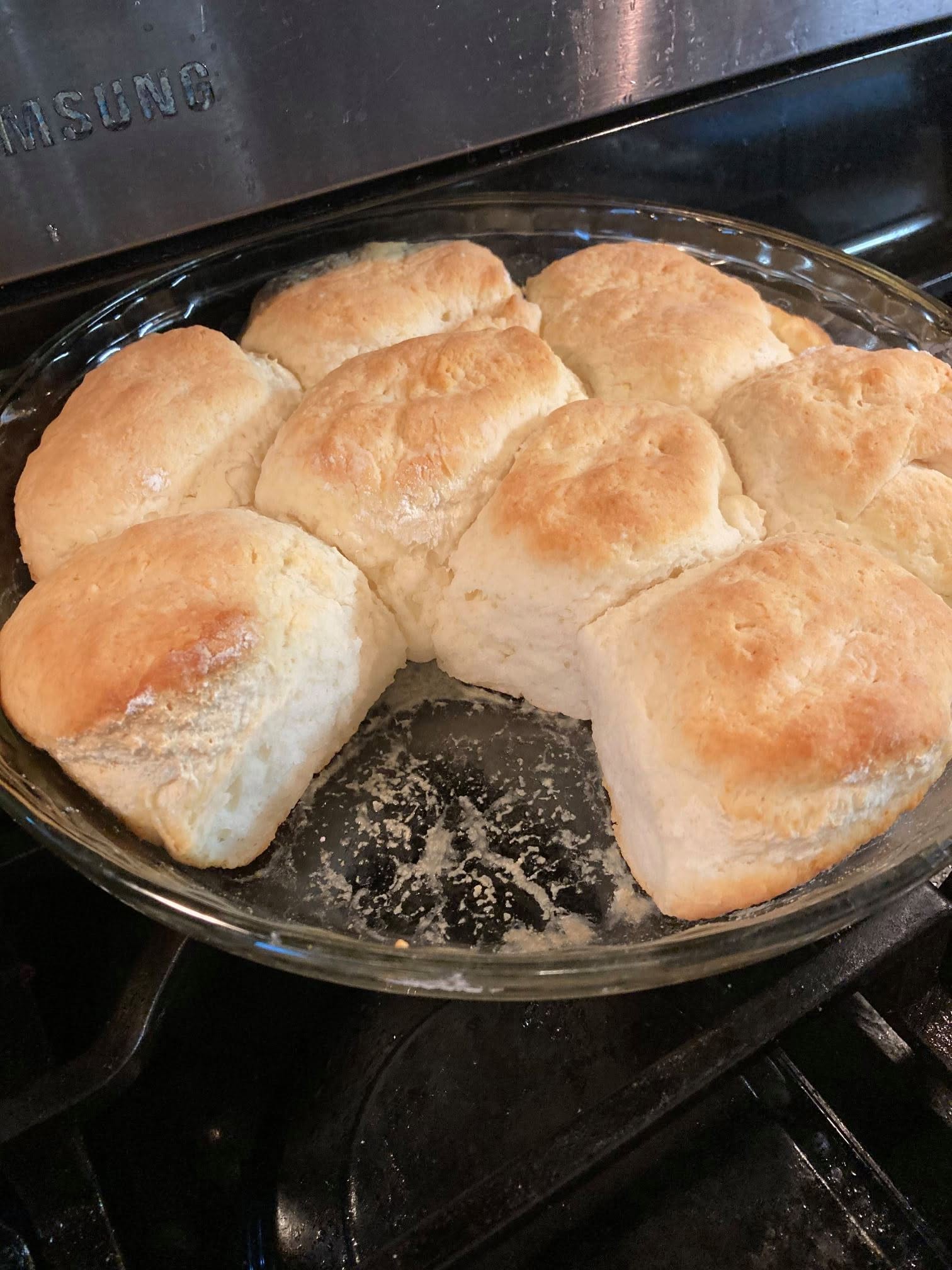
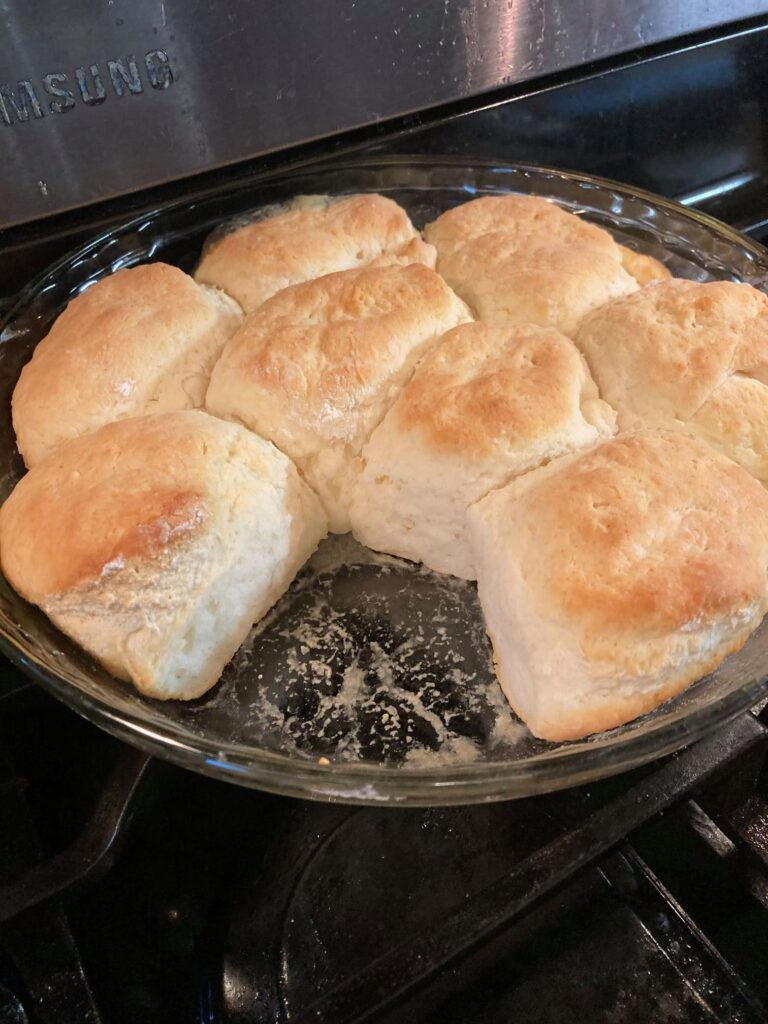
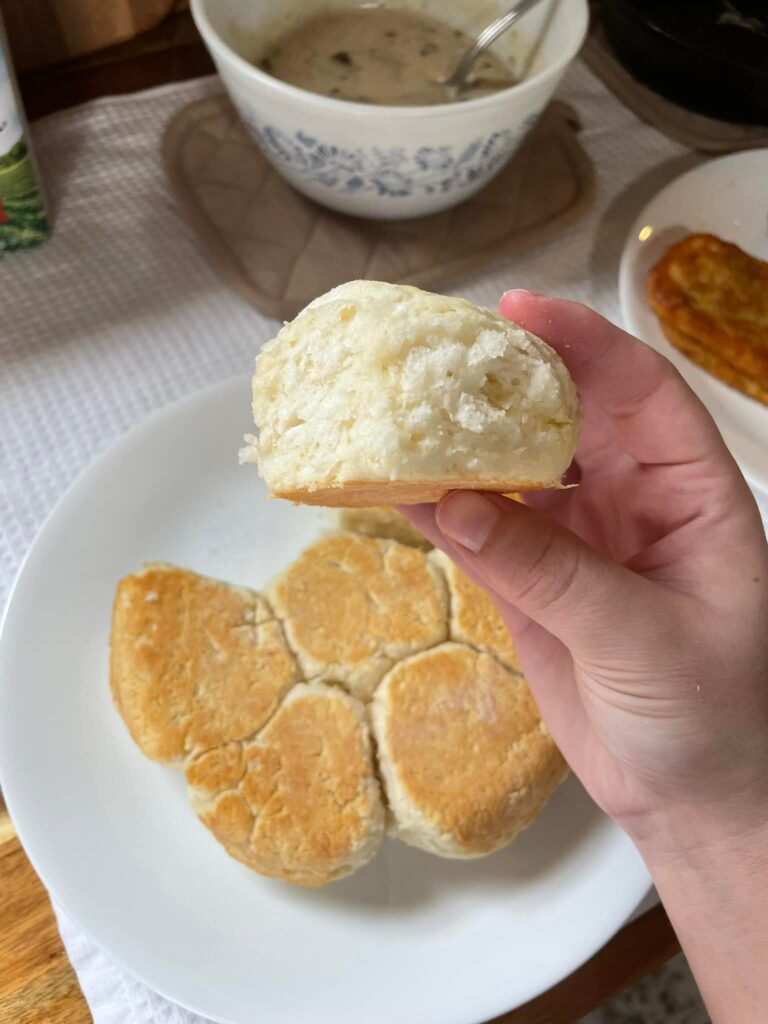
When I shared a little glimpse of these classic beauties resting in a round glass pie dish with our lovely Old Fashioned Family Recipes Facebook community, so many of you sweet ladies immediately recognized that distinct, crowded arrangement. Baking biscuits tucked tight against one another, so they lean on each other to climb skyward rather than spreading flat, is the ultimate secret of the hill country. Let us step back into that warm, bustling kitchen together and look at how to pull these high-rising masterpieces together from scratch.
Why this recipe works
-
The Soft Southern Winter Wheat Base: Utilizing a traditional, extra-fine self-rising flour milled from pure soft winter wheat ensures a significantly lower protein and gluten content. This structural lightness allows the dough to rise to an exceptionally fluffy, cloud-like height without turning heavy.
-
The Pie-Dish Clustering Method: Arranging the large, hand-shaped dough portions tightly inside a round glass pie plate forces the expanding steam to push the biscuits upward instead of outward. This collective structure produces remarkably high edges that stay tender and melt-in-your-mouth soft.
-
The Cold-Fat Layering Technique: Working cold lard or shortening into the flour with light, rapid finger movements preserves tiny, solid pockets of fat. When the intense heat of the oven strikes these pockets, the fat melts instantly, leaving behind distinct, tender flaky gaps throughout the crumb.
-
The Buttermilk Hydration Activation: Introducing acidic, cultured buttermilk to the self-rising flour triggers an immediate leavening reaction. This chemical expansion creates hundreds of tiny air bubbles within the wet dough, producing an incredibly light, pillow-soft interior texture.
What you’ll need
This honest, Appalachian staple requires no fancy grocery items, relying entirely on three basic staples that have anchored country larders for over a century.
-
White Lily Self-Rising Flour: This specific, low-protein soft wheat flour is the non-negotiable secret to achieving an authentic, sky-high southern rise.
-
Pure Vegetable Shortening or Lard: Provides the necessary, clean-tasting fat that shortens the gluten strands, ensuring a beautifully tender biscuit texturing.
-
Real Southern Buttermilk: Rich and tangy, the natural acidity provides both the characteristic heritage flavor and the essential lifting power for the dough.
-
Melted Butter (for brushing): A golden coat brushed over the steaming crowns immediately after baking creates a gorgeous, glistening finish.
Substitutions & Variations
While the traditional three-ingredient combination yields the absolute truest vintage flavor, simple adjustments can be made depending on your current pantry stock. If self-rising flour is unavailable on your local grocery shelves, you can create a reliable homemade substitute by whisking together two cups of standard all-purpose flour, one tablespoon of baking powder, and one teaspoon of fine salt. For a richer, more decadent crumb, you can swap the vegetable shortening for an equal amount of ice-cold, cubed unsalted butter, which gives the biscuits a distinct, pasture-rich flavor. If you wish to turn these into a hearty savory breakfast, a half-cup of grated sharp cheddar cheese and a pinch of ground black pepper can be gently folded into the dry ingredients before introducing the buttermilk.
How to make Old Fashioned Cathead Biscuits
Step 1: Prep the Oven and Glass Pan
Preheat your oven to 450°F, ensuring the rack is positioned right in the center so the high heat circulates evenly around your baking vessel. Take a standard nine-inch round glass pie dish—just like the one my mother always used—and grease the bottom and sides thoroughly with a small dab of shortening or butter to prevent any sticking.
Step 2: Incorporate the Cold Fat
Measure your self-rising flour into a wide, shallow vintage mixing bowl. Add your cold vegetable shortening or lard directly to the flour. Using your fingertips or a pastry blender, work the fat into the flour with quick, light strokes, lifting the flour up to incorporate air until the mixture resembles coarse cornmeal with a few pea-sized clusters of fat remaining.
Step 3: Stir in the Buttermilk
Make a deep well right in the center of your flour mixture and pour in the cold buttermilk all at once. Using a sturdy wooden spoon or a vintage fork, stir gently from the outside in, just until the flour absorbs the liquid and a soft, wet, and slightly sticky dough pulls away from the sides of the bowl. Be careful not to overmix, or you will develop the gluten and make the biscuits tough.
Step 4: Shape the Cathead Rounds
Dust your hands and a wooden pastry board heavily with extra self-rising flour. Rather than rolling and cutting the dough with a metal cutter, turn the soft dough out and gently pat it with your floured palms to a thickness of about one inch. Divide the dough into seven or eight large, substantial portions—roughly the size of a cat’s head, which is how this classic hill country style earned its name.
Step 5: Cluster Inside the Plate
Gently shape each portion into a rustic round with your palms, shaking off any excess loose flour. Place the dough balls directly into your greased glass pie dish, nesting them tightly against one another in a circular pattern with one final round resting proudly right in the center of the plate. The edges of the dough should push firmly against each other.
Step 6: Bake to a Towering Golden Brown
Slide the glass plate into your preheated oven and bake for fifteen to eighteen minutes. Keep a close eye through the oven door during the final few minutes; you are looking for the tall, craggy tops to turn a beautiful, uniform golden-brown tan. The moment you pull them from the oven, brush the steaming hot crowns generously with melted butter, let them rest for two minutes, and serve hot.
Destiny’s tips
-
I always rely on White Lily flour in my kitchen: Just like my mother before me, I know this is the absolute best flour you can get for biscuits; its soft winter wheat composition makes an unmatched, fluffy crumb.
-
In my kitchen, we handle the dough as little as humanly possible: Overworking or kneading biscuit dough warms the fat and overdevelops the gluten, transforming what should be a cloud-like treat into a dense, heavy disc.
-
I always crowd the biscuits into a glass dish: Baking them separated on a flat sheet pan makes them spread out and dry out along the edges; clustering them in a round pie plate guarantees they rise exceptionally high and stay incredibly soft.
-
In my kitchen, leftover biscuits are split and fried: If you have extra portions the next morning, split them in half and toast them face-down in a hot cast iron skillet with a pat of butter until crispy and golden.
What to serve with Old Fashioned Cathead Biscuits
-
Skillet Country Sausage Gravy: A thick, peppery pork sausage gravy slow-simmered in cast iron is the ultimate traditional companion for drowning these giant biscuits.
-
Blackberry Winter Jam: A heavy spoonful of seedless blackberry jam provides a gorgeous, sweet, and tart fruit contrast to the rich buttermilk crumb.
-
Sorghum Molasses and Butter: Drizzling thick, dark country sorghum molasses over a hot, buttered biscuit offers a true taste of old-fashioned Kentucky hill comfort.
Frequently Asked Questions
Why did my biscuits turn out flat instead of rising high?
A flat rise usually happens if your flour has lost its leavening power or if the dough was rolled too thin before shaping. To ensure a magnificent climb, always check the expiration date on your self-rising flour and make sure to nestle the dough rounds tightly together in a small baking dish.
Can I use a cast iron skillet instead of a glass pie dish?
You can absolutely use a well-seasoned ten-inch cast iron skillet for baking this recipe. The iron will produce a much crispier, deeper golden bottom crust than glass, which many old-time cooks prefer for a rustic, farmhouse-style finish.
Why is my biscuit dough so sticky and difficult to handle?
Authentic southern biscuit dough should be quite soft and damp; this moisture is exactly what creates the steam necessary for a spectacular rise in a hot oven. Simply keep your hands and work surface heavily dusted with extra flour to keep it from sticking as you shape the rounds.
How do I store and reheat these heirloom biscuits?
Store any extra biscuits in a covered container or a zip-top bag at room temperature for up to two days. To reheat them to their original fresh-baked glory, wrap them loosely in aluminum foil and warm them in a 350°F oven for eight to ten minutes until steaming.
Old Fashioned Southern Cathead Biscuits
Ingredients
- 3 cups White Lily self-rising flour plus extra for dusting
- 1/2 cup cold vegetable shortening or lard
- 1.25 cups cold real southern buttermilk
- 2 tbsp unsalted butter melted (for brushing)
Instructions
- Preheat your oven to 450°F and thoroughly grease a 9-inch round glass pie dish with shortening or butter.
- Place the self-rising flour into a large mixing bowl and add the cold vegetable shortening.
- Work the shortening into the flour with your fingertips until the mixture resembles coarse crumbs with some pea-sized pieces.
- Pour the cold buttermilk into the center and stir gently with a fork just until a soft, damp dough comes together.
- Turn out onto a heavily floured board, pat gently to a 1-inch thickness, and divide into 7 or 8 large portions.
- Shape each portion into a rustic round and arrange them tightly together in a circle inside the prepared glass dish.
- Bake for 15-18 minutes until puffed and golden brown across the top, then brush immediately with melted butter.
Notes

Great post,Thanks for sharing