Traditional Southern White Fruitcake
A Treasured Southern Holiday Tradition
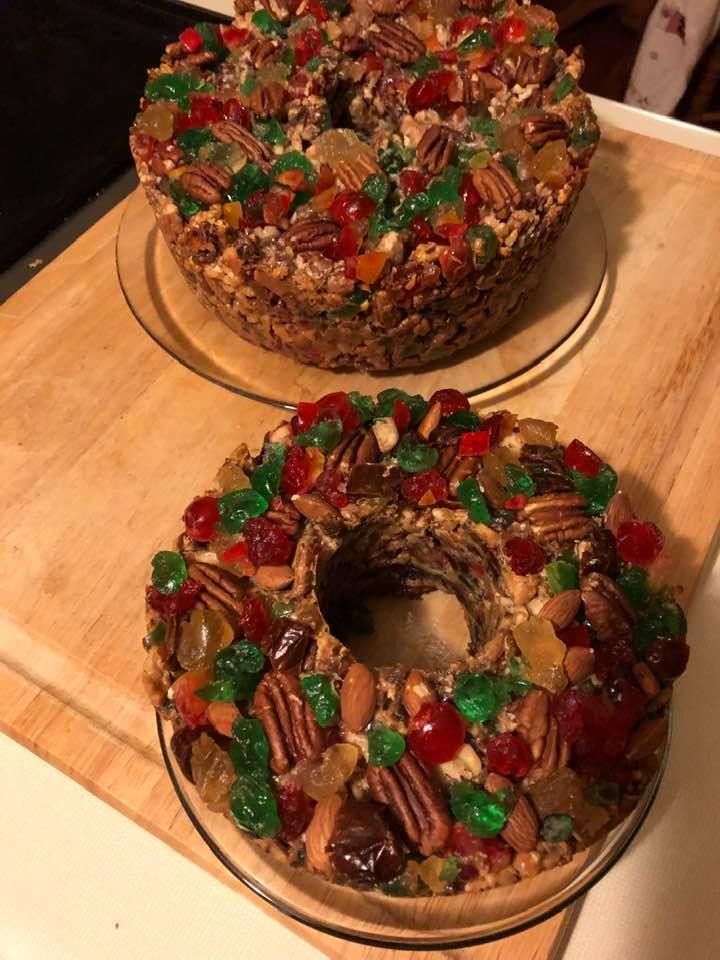
When it comes to Southern holiday baking, nothing evokes nostalgia quite like a traditional white fruitcake. While dark fruitcakes, heavy with molasses and spices, often get a bad reputation, a classic white fruitcake is entirely different. It is a dense, buttery, brightly flavored cake absolutely packed with vibrant candied fruits, golden raisins, and rich, toasted pecans.
This specific recipe is a true family heirloom. Originally baked in a Dutch oven on a wood stove by a beloved grandmother back in the early 1900s, this recipe has been passed down through generations. It is a massive, incredibly heavy cake—the original recipe is measured in pounds rather than cups! Baking this cake is a labor of love that is typically done on the Sunday afternoon following Thanksgiving, allowing it plenty of time to age and soften before the Christmas holidays arrive.
Because this recipe yields a massive amount of batter, it is highly recommended to bake it in a combination of large tube pans, smaller loaf pans, or even muffin tins for sharing. Whether you enjoy it fresh or let it age in a tight container for several weeks, this Southern white fruitcake is the perfect way to ring in the holiday season. It is best served in very thin slices, ideally with a dollop of fresh whipped cream.
Why You’ll Love This Recipe
- Incredibly Buttery Base: Unlike dark, spice-heavy fruitcakes, this white fruitcake uses an entire pound of butter to create a rich, pound-cake-like crumb.
- Massive Yield: This heirloom recipe makes enough cake to fill several pans, making it perfect for gifting to family and friends during the holidays.
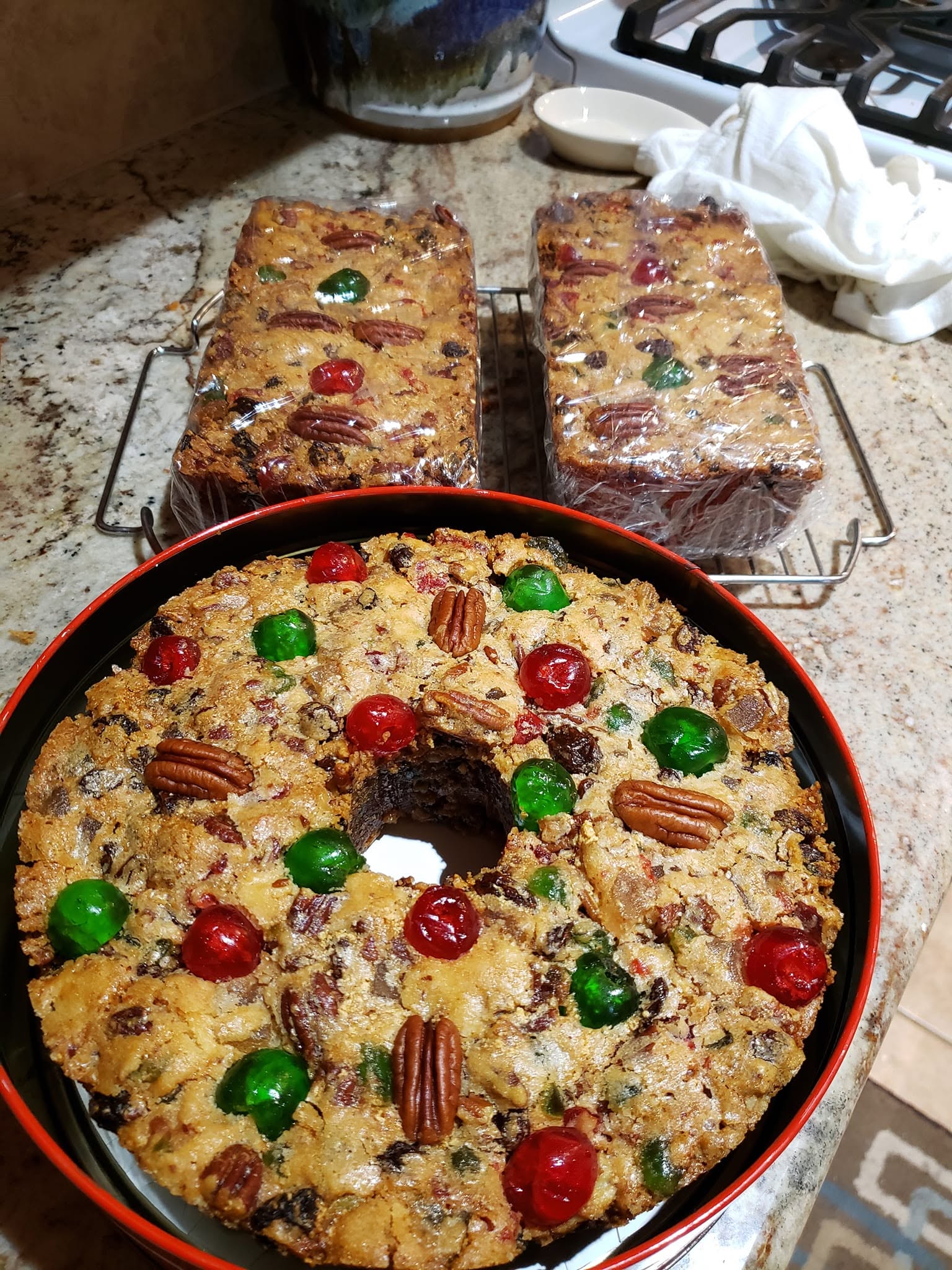
- Aesthetic Appeal: The bright red and green candied cherries, golden raisins, and candied pineapple make this a stunning centerpiece for a dessert table.
- Long Shelf Life: This cake is specifically designed to be stored in a tight container for weeks, allowing the flavors to meld and deepen over time.
- Bright Citrus Flavor: A generous amount of lemon extract cuts through the dense sweetness, providing a bright, refreshing flavor profile.
Ingredients
(Note: This recipe is traditionally measured by weight for accuracy due to the sheer volume of ingredients, but cup measurements have been provided for convenience).
- Butter: 1 lb (4 sticks) of high-quality butter, softened to room temperature.
- Sugar: 1 lb (3 ¼ cups) of granulated white sugar.
- Eggs: 6 large eggs, carefully separated into yolks and whites.
- Pecans: 1 qt (4 cups) of chopped pecan halves.
- Golden Raisins: 1 lb (3 cups) of white (golden) raisins.
- Candied Pineapple: 1 lb of chopped candied pineapple.
- Candied Cherries: 2 lbs of candied cherries (a mix of red and green), plus extra for decorating the top.
- Flour: 1 lb (4 cups) of all-purpose flour, divided.
- Baking Powder: 1 tsp of baking powder.
- Lemon Extract: 2 bottles (or 2 full tablespoons) of high-quality lemon extract.
Step-by-Step Instructions
Step 1: Prep the Fruit and Nuts
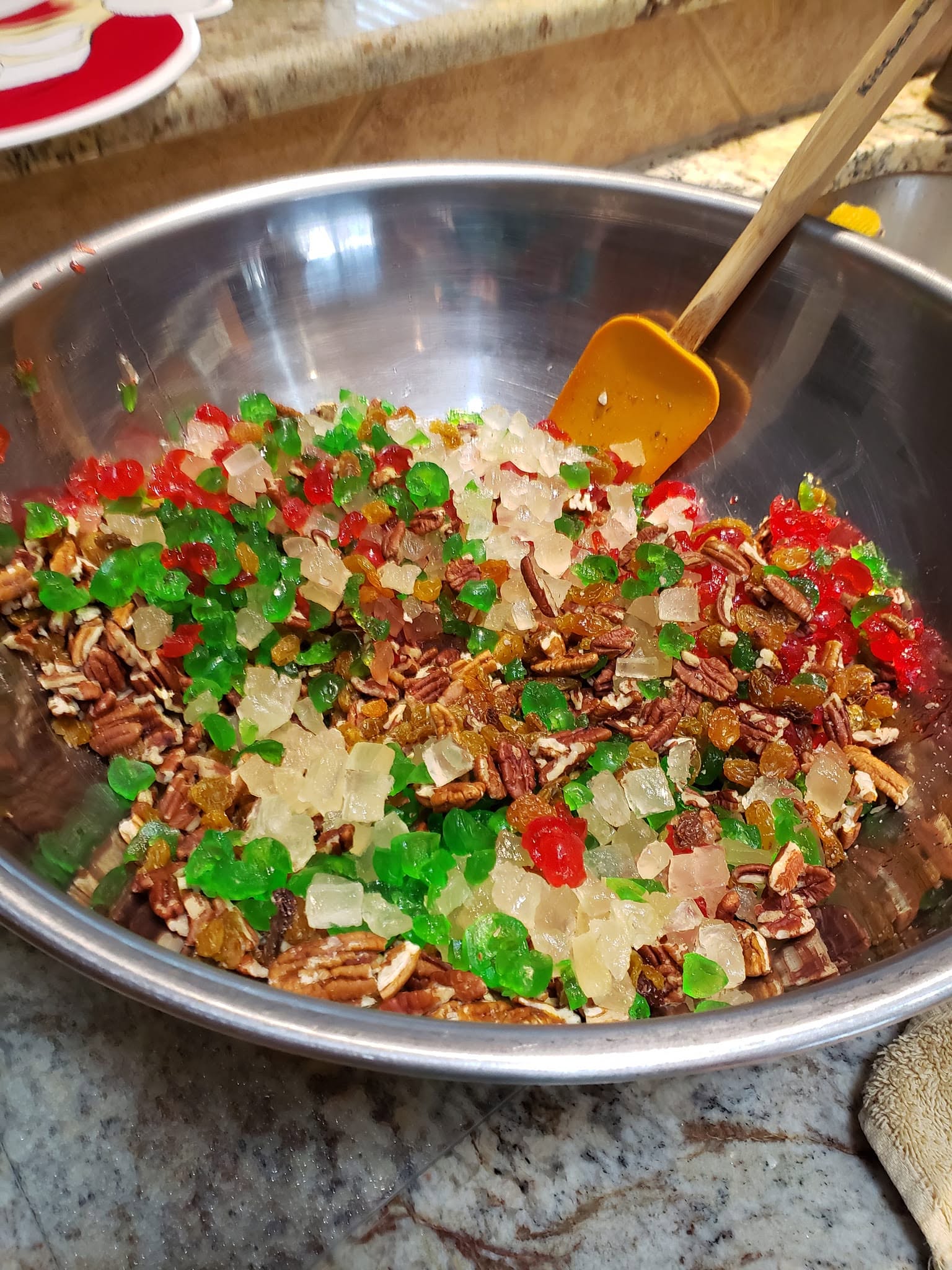
In an extra-large mixing bowl, combine the 4 cups of chopped pecans, 3 cups of white raisins, 1 pound of candied pineapple, and 2 pounds of candied cherries. Take a small handful of your measured flour and sprinkle it over the fruit and nut mixture. Toss everything together until the fruit is well dredged (coated) in the flour. This prevents the heavy fruit from sinking to the bottom of the cake during baking.
Step 2: Cream the Butter and Sugar
In the bowl of a heavy-duty stand mixer, cream together the 1 pound of softened butter and the 3 ¼ cups of sugar. You must beat this mixture for a significant amount of time until it is incredibly light and fluffy. Test it by rubbing a small amount between your thumb and forefinger; there should be absolutely no grit remaining from the sugar.
Step 3: Add the Egg Yolks
Once the butter and sugar are perfectly creamed, add the 6 beaten egg yolks to the mixture. Continue to beat the mixture thoroughly until the yolks are fully incorporated.
Step 4: Mix the Dry Ingredients
In a separate medium bowl, whisk together the remaining flour and the 1 teaspoon of baking powder. Slowly add this dry mixture into the butter mixture, beating well. Add the 2 tablespoons of lemon extract and beat the batter one final time.
Step 5: Fold in the Fruit and Egg Whites
If you are using an electric mixer, remove the bowl from the stand. This next step requires elbow grease! Using a heavy-duty wooden spoon or stiff spatula, fold the massive bowl of flour-dredged fruit and nuts into the incredibly thick batter. Finally, in a clean glass or metal bowl, beat your 6 egg whites until stiff peaks form. Gently fold the beaten egg whites into the heavy batter as the very last step to lighten the cake.
Step 6: Bake Low and Slow
Preheat your oven to a very low 250°F. Grease and flour your baking pans thoroughly. Because of the volume, it is best to use two large tube pans, or a combination of one tube pan and several smaller loaf pans. Pour the heavy batter into the pans. Bake the large tube pans for 3 full hours. The cake is done when a long wooden skewer inserted into the center comes out clean.
Expert Cooking Tips
- Use a Huge Bowl: Do not underestimate the volume of this recipe. You will need your absolute largest mixing bowl to successfully fold the massive amount of fruit and nuts into the batter.
- Do Not Skip Dredging: Tossing the candied fruit and nuts in flour before folding them into the batter is critical. The flour acts as a “glue” that suspends the heavy pieces throughout the cake.
- Beat the Sugar Thoroughly: Take the time to cream the butter and sugar until the grit is completely gone. This creates the fine, tender crumb of the cake.
- Adjust the Baking Time: If you decide to bake part of the batter in smaller loaf pans or muffin tins, you must reduce the baking time significantly. Keep a close eye on smaller pans after the 1.5-hour mark.
- Decorate Before Baking: For a beautiful presentation, press a few whole candied cherries and perfect pecan halves into the top of the batter right before you place the pans in the oven.
Variations to Try
- Bourbon Soaked Fruit: For an adult twist, soak the golden raisins and candied pineapple in a cup of good quality Southern bourbon overnight before dredging them in flour.
- Vanilla and Almond: If you find the lemon extract too overpowering, substitute one tablespoon of the lemon extract for a teaspoon of high-quality vanilla extract and a half teaspoon of almond extract.
- Dark Walnut Swap: While pecans are traditional in the South, swapping half of the pecans for chopped English walnuts adds a slightly more bitter, complex note that balances the intense sweetness of the candied fruit.
What to Serve With White Fruitcake
Because this cake is so dense, heavy, and incredibly sweet, it requires very little accompaniment. It is traditionally served in very thin, almost translucent slices. A dollop of unsweetened or very lightly sweetened freshly whipped cream is the perfect addition to cut through the richness. It is also exceptional when served alongside a hot cup of strong black coffee or a delicate cup of hot tea on a chilly holiday afternoon.
Storage & Reheating
Refrigerator
Traditional fruitcake does not need to be refrigerated. It is best stored at room temperature in a tightly sealed tin or a heavy plastic container.
Long-Term Aging
This cake is designed to be aged. Once completely cooled, wrap the cake tightly in cheesecloth or a tea towel, and place it in a tight container. It can be stored this way in a cool, dark place for several weeks before serving. The flavors will mature and deepen significantly over time.
The Apple Trick
📍 PLACE IMAGE #3 HERE (485361612_10221399956827100_8645279510006017877_n.jpg)
Alt Text: A photograph of a vintage, handwritten recipe for White Fruitcake in a spiral-bound family cookbook.
If you find that your aged cake seems a little bit dry upon slicing, do not throw it away! Wrap the cake in a tea towel, place it in a tight container, and lay a few freshly cut apple slices directly on top of the towel. Close the container and let it sit for a day or two. The cake will absorb the moisture from the apples and become perfectly soft again.
Frequently Asked Questions
What makes this a “white” fruitcake?
Unlike dark fruitcakes that rely heavily on molasses, brown sugar, and dark spices like cloves and nutmeg, a white fruitcake uses white granulated sugar, a massive amount of butter, and a standard pound cake base. This results in a lighter-colored, buttery crumb that allows the bright colors of the fruit to shine through.
Why is the oven temperature so low?
Baking at 250°F is essential for this recipe. Because the cake is incredibly dense and packed with sugar-heavy candied fruit, baking it at a standard 350°F would cause the outside to burn long before the center of the massive cake cooked through.
Do I really need to beat the egg whites separately?
Yes. Because the batter is weighed down by literally pounds of fruit and nuts, the baking powder alone is not enough to leaven the cake. Folding in stiffly beaten egg whites at the very end provides essential aeration, preventing the final cake from becoming an inedible brick.
Where do I find candied fruit?
Candied cherries (often called glacé cherries) and candied pineapple are typically found in the baking aisle of most major grocery stores, but their availability spikes significantly during the months of November and December.
Can I freeze this fruitcake?
Yes, fruitcake freezes exceptionally well. Wrap the completely cooled cake tightly in several layers of plastic wrap, followed by a layer of heavy-duty aluminum foil. It can be frozen for up to a year. Thaw it slowly at room temperature before slicing.
Final Thoughts
Baking this traditional Southern white fruitcake is so much more than just making a dessert; it is participating in a cherished holiday ritual. From creaming the massive amount of butter to folding in the incredibly heavy bowl of brightly colored fruits, every step feels like a celebration of the season. Whether you are baking it to age for Christmas or wrapping up smaller loaves for neighbors, this heirloom recipe is guaranteed to become a new family tradition in your own kitchen.
Traditional Southern White Fruitcake
A massive, heirloom Southern white fruitcake packed with golden raisins, candied cherries, pineapple, and pecans in a rich, buttery pound cake base.
Equipment
- Extra-large mixing bowl
- Heavy-duty stand mixer
- 2 large tube pans or bundt pans
- Stiff wooden spoon or spatula
Ingredients
- 1 lb 4 sticks butter, softened
- 1 lb 3 1/4 cups granulated sugar
- 6 large eggs separated
- 1 qt 4 cups pecan halves, chopped
- 1 lb 3 cups white (golden) raisins
- 1 lb candied pineapple chopped
- 2 lbs candied cherries red and green mix
- 1 lb 4 cups all-purpose flour, divided
- 1 tsp baking powder
- 2 tbsp or 2 small bottles lemon extract
Instructions
- In an extra-large bowl, combine the pecans, raisins, pineapple, and cherries. Take a small handful of the measured flour and toss with the fruit/nut mixture until well dredged.
- In a stand mixer, cream the butter and sugar until incredibly fluffy and absolutely no grit remains when rubbed between your fingers.
- Add the 6 beaten egg yolks to the butter mixture and beat well.
- Whisk the remaining flour and baking powder together. Add to the butter mixture, followed by the lemon extract. Beat until smooth.
- Remove the bowl from the mixer. Using a heavy spoon, manually fold the flour-dredged fruit and nuts into the thick batter.
- In a separate clean bowl, beat the 6 egg whites until stiff peaks form. Gently fold the egg whites into the heavy batter as the final step.
- Preheat oven to 250°F. Grease and flour two large tube pans (or a combination of tube and loaf pans).
- Pour the batter into the prepared pans. Bake for 3 hours at 250°F, or until a long skewer inserted into the center comes out clean.
- Cool completely before removing from pans. Store in a tight container for several days or weeks to age.
Notes
Smaller Pans: If baking in smaller loaf pans or muffin tins, reduce the baking time significantly. Check smaller pans after 1.5 hours. Dry Cake Trick: If an aged cake seems dry, wrap it in a tea towel, place it in a tight container, and lay fresh apple slices on top of the towel for a day to rehydrate it.