Taralli Glassati Recipe – Traditional Italian Glazed Egg Biscuits
If you grew up in a Southern Italian family, there’s a good chance you remember seeing beautiful, white-glazed taralli on the table around Easter. These thick, ring-shaped biscuits, covered in sweet sugar icing and sometimes colorful sprinkles, are one of those old-fashioned treats that bring back memories of Nonna’s kitchen.
Known as Taralli Glassati or Taralli all’Uovo Glassati, these traditional Italian glazed egg biscuits are especially cherished in parts of Campania, including the province of Benevento near Naples.
Unlike the small, crunchy taralli commonly served as savory snacks, these Easter biscuits are large, rustic, and lightly sweetened. They’re boiled before baking, giving them their distinctive texture, and finished with a traditional sugar glaze called naspro.
This recipe is adapted from a home cook named Pina in Benevento, who shared her family’s Easter tradition in the Cucina Napoletana Facebook group.
And there’s one ingredient that might make Italian-American readers smile: Brioschi! Yes, the familiar effervescent digestive product makes an appearance in this traditional recipe.
What Are Taralli Glassati?
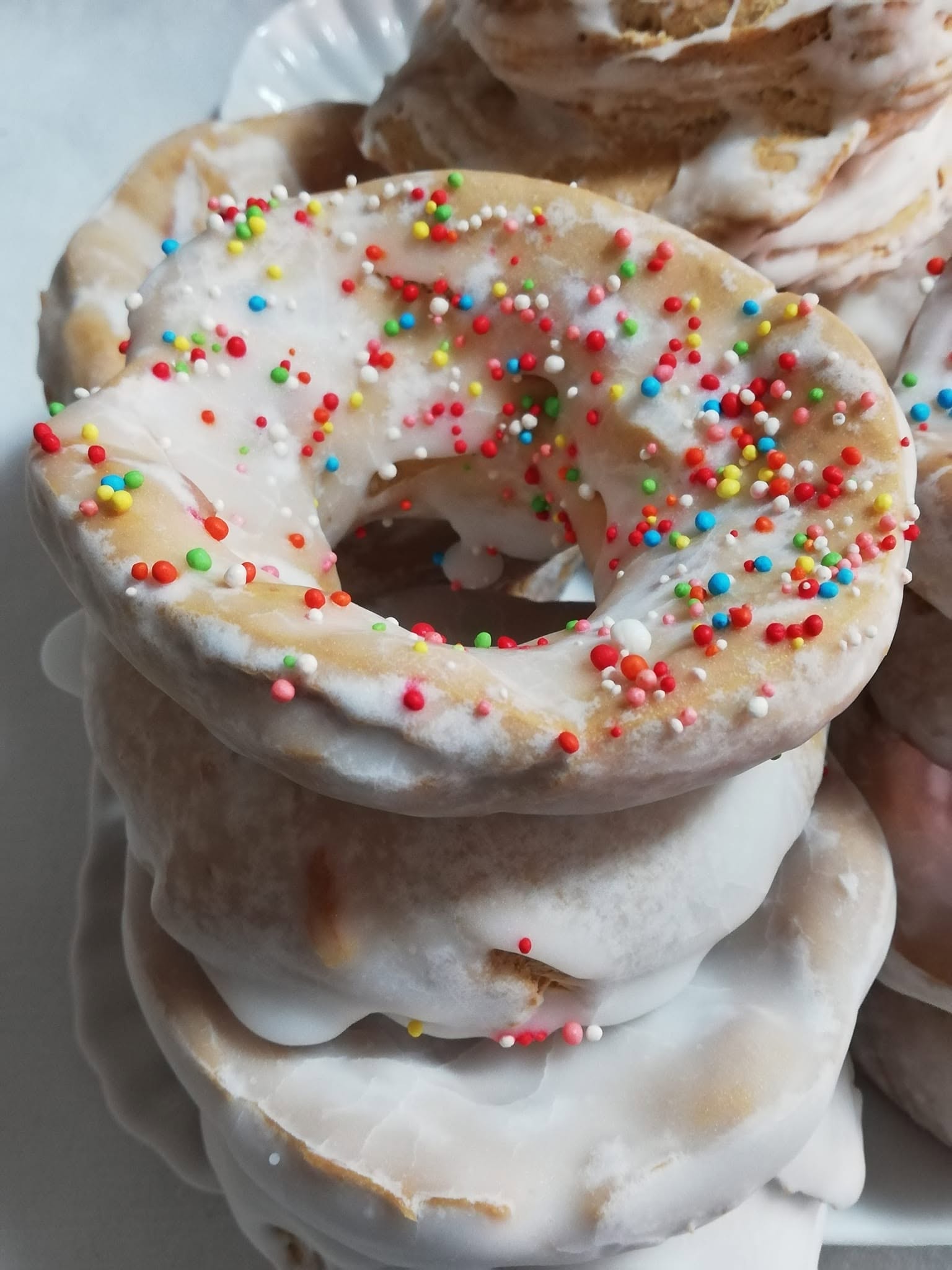
Taralli Glassati are traditional Southern Italian egg biscuits shaped into large rings, boiled in water, baked until firm, and coated in a sweet white sugar glaze.
In Campania, these biscuits are often associated with Easter celebrations and family gatherings.
The dough contains eggs, flour, vegetable oil, and a small amount of leavening. Unlike many American cookies, it contains no added sugar, relying on the sweet outer glaze for much of its flavor.
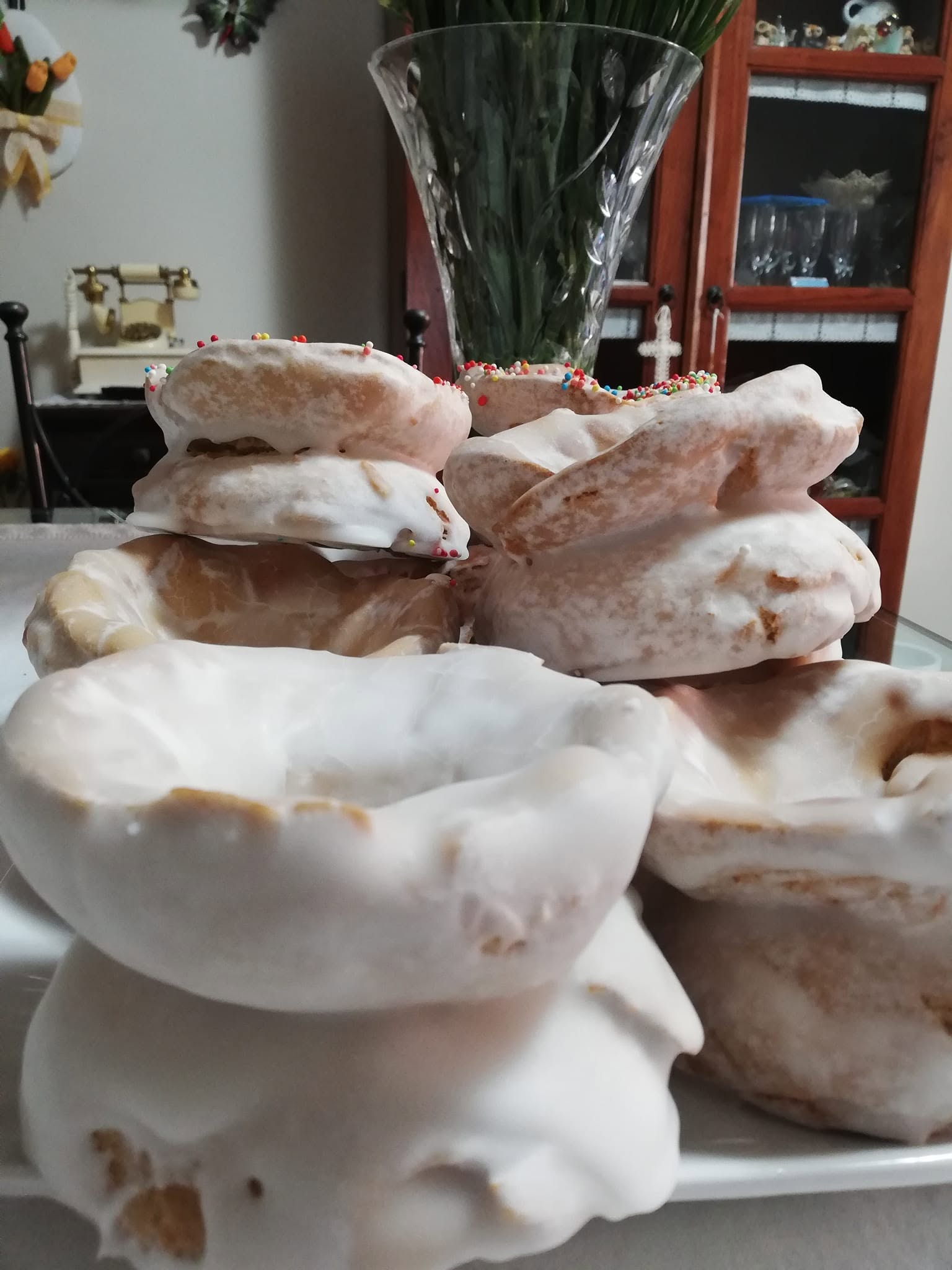
Their appearance is beautifully rustic. Some have smooth white icing, while others are decorated with colorful nonpareil sprinkles.
Why You’ll Love This Recipe
- Authentic Italian tradition: Inspired by a home recipe from Benevento, Campania.
- Perfect for Easter: A nostalgic addition to an Italian Easter dessert table.
- Unique preparation: Boiling before baking creates the characteristic texture.
- Simple dough ingredients: Made primarily with eggs, flour, and oil.
- Beautiful presentation: Thick white glaze and colorful sprinkles make these biscuits especially festive.
Ingredients for Traditional Taralli Glassati
For the Egg Biscuit Dough
- 8 medium eggs
- 750 g flour (approximately 6 cups, depending on the flour), divided equally between Italian 00 flour and strong Manitoba flour
- 1 tablespoon Brioschi effervescent powder, or an appropriate equivalent
- A pinch of baking soda
- A pinch of salt
- 100 ml vegetable oil (approximately ⅓ cup plus 1 tablespoon and 1 teaspoon)
- 1 tablespoon food-grade alcohol intended for baking
For the Glaze
The original recipe uses traditional naspro, a cooked Italian sugar glaze. However, the source does not specify the exact ingredient quantities.
For an easier homemade alternative, you can prepare a simple lemon sugar glaze using:
- 2 cups powdered sugar
- 2–3 tablespoons fresh lemon juice or water
- ½ teaspoon vanilla extract, optional
- Colorful nonpareil sprinkles, optional
Note: This powdered-sugar glaze is a convenient alternative, not the traditional cooked naspro used in the original recipe.
How to Make Taralli Glassati
Step 1: Prepare the Eggs
Crack the eggs into a large bowl and beat them lightly with a fork.
Transfer the beaten eggs to the bowl of a stand mixer fitted with a dough hook.
Add the Brioschi effervescent powder and allow it to dissolve slightly in the eggs.
Step 2: Add the Flour and Oil
Begin adding the flour gradually, mixing on low speed.
Pour in the vegetable oil, followed by another small portion of flour.
Sprinkle the baking soda over the flour rather than adding it directly to the eggs.
Continue mixing and gradually adding more flour.
Step 3: Add the Remaining Ingredients
Add the food-grade baking alcohol, sprinkling it over the flour as described in the original recipe.
The original instructions recommend keeping the alcohol from direct contact with the eggs during mixing.
Add the remaining flour and salt.
Increase the mixer to medium speed and knead for approximately 5 minutes.
The finished dough should be firm enough to shape into rings.
Step 4: Shape the Taralli
Transfer the dough to a clean work surface.
Divide it into portions and roll each portion into a thick rope.
Join the ends of each rope to create a large ring.
Press the ends together securely so the rings hold their shape during cooking.
Traditional Taralli Glassati are often larger and thicker than ordinary savory taralli.
Step 5: Boil the Taralli
Bring a large pot of water to a gentle boil.
Carefully lower a few dough rings into the water, leaving enough room for them to move.
Turn them frequently to encourage even cooking.
According to the original recipe, the taralli are ready to remove when the exterior feels set and no longer feels like raw dough when gently touched.
Remove them carefully using a slotted spoon and transfer them to a clean towel or cooling rack.
Allow them to cool before proceeding.
Step 6: Score the Biscuits
Once the boiled taralli have cooled, use a sharp knife to make a horizontal cut around the outer circumference of each ring.
The cut should extend approximately halfway through the thickness of the dough.
Do not slice the biscuits completely in half.
This traditional scoring technique helps create their characteristic appearance during baking.
Step 7: Bake Until Firm
Preheat a fan-assisted oven to 350°F (180°C).
Arrange the taralli on baking sheets lined with parchment paper, leaving space between each ring.
Bake for approximately 1 hour, following the original recipe’s guidance.
The exact baking time may vary depending on the size and thickness of the biscuits.
The finished taralli should be dry, firm, and lightly golden.
Remove from the oven and allow them to cool completely before glazing.
Step 8: Prepare the Sugar Glaze
For the simplified glaze, place the powdered sugar in a mixing bowl.
Gradually add lemon juice or water, stirring until smooth.
Add vanilla extract if desired.
The glaze should be thick enough to coat the biscuits without running off completely.
For the authentic version, use a separately prepared traditional cooked naspro glaze.
Step 9: Glaze the Taralli
Dip the cooled taralli into the glaze or spoon it generously over the top.
Allow some of the glaze to drip naturally down the sides.
If desired, immediately decorate with colorful nonpareil sprinkles.
Place the glazed biscuits on a wire rack or parchment-lined tray until the coating has completely set.
What Is Naspro Glaze?
Naspro is a traditional Italian sugar glaze used on certain Southern Italian pastries and biscuits.
Unlike a basic powdered-sugar icing, traditional naspro is made through a cooked sugar preparation that develops a distinctive white coating.
In the recipe shared by Pina, the glaze was prepared following a video by Simone Esposito.
She described cooling the mixture in a stand mixer fitted with a K-beater until it became firm, then gently remelting it over a double boiler and adding a little lemon juice before coating the biscuits.
Because her original post doesn’t include the precise glaze ingredients or cooking temperatures, those details should be obtained from the referenced demonstration rather than guessed.
Tips for Making Traditional Italian Egg Biscuits
Use the recommended flour combination. Italian 00 flour provides a fine texture, while strong Manitoba flour adds structure to the dough.
Don’t skip the boiling step. Boiling before baking is an essential part of this traditional preparation.
Avoid overcrowding the pot. Cook only a few taralli at a time so they can be turned easily.
Let them cool before scoring. This makes the rings easier to handle and helps prevent tearing.
Allow plenty of baking time. These biscuits are relatively thick and need time to dry and firm up in the oven.
Glaze only when completely cool. Warm biscuits may cause the icing to become too thin or run off.
How to Store Taralli Glassati
Once the glaze has completely hardened, store the biscuits in an airtight container in a cool, dry place.
For best quality, enjoy them within approximately 5–7 days.
Place parchment paper between layers to protect the icing.
Avoid storing them while the glaze is still wet, as the biscuits may stick together.
Frequently Asked Questions
Are Taralli Glassati the same as Italian donuts?
No. Although they have a similar ring shape, Taralli Glassati are egg-based biscuits that are boiled and baked rather than deep-fried.
Why do you boil Taralli Glassati before baking?
Boiling is part of the traditional preparation and helps establish the outer structure before the biscuits finish baking.
Can I make Taralli Glassati without Brioschi?
The original recipe specifically calls for Brioschi or another effervescent powder. Substituting a different leavening agent may change the results, so an alternative should be tested rather than assumed to work identically.
What is the difference between naspro and regular icing?
Traditional naspro is a cooked sugar glaze, while ordinary powdered-sugar icing is typically made by mixing powdered sugar with liquid.
Are Taralli Glassati only made for Easter?
They’re particularly associated with Easter traditions in parts of Southern Italy, but there’s no reason you can’t enjoy them throughout the year.
A Sweet Taste of Southern Italian Tradition
Taralli Glassati are more than just glazed biscuits. They’re a reminder of family gatherings, holiday baking, and the regional recipes passed from one generation to the next.
From their unusual boiling-and-baking method to the thick white glaze that covers each ring, these biscuits represent a wonderful piece of Southern Italian baking heritage.
Whether you remember your Nonna making them at Easter or you’re discovering them for the first time, this traditional recipe is worth keeping.
Did your family make Taralli Glassati for Easter? And did you call them by another name? Share your memories in the comments!