Traditional Polish Pączki Recipe (Fluffy Jam-Filled Polish Donuts)
There’s something special about a homemade Polish pączek. Golden brown on the outside, wonderfully soft and fluffy inside, and filled with sweet fruit jam, these traditional Polish Pączki are a treat worth making from scratch.
If you grew up in a Polish-American family, you might remember trays of freshly fried pączki appearing around Fat Tuesday, especially in the weeks leading up to Lent. Some families fill them with rose petal jam, while others prefer plum preserves, raspberry jam, or custard.
This traditional Polish donut recipe uses a rich yeast dough made with butter, egg yolks, milk, and a little vodka or rum. The dough rises until light and airy before being shaped, filled, and fried until beautifully golden.
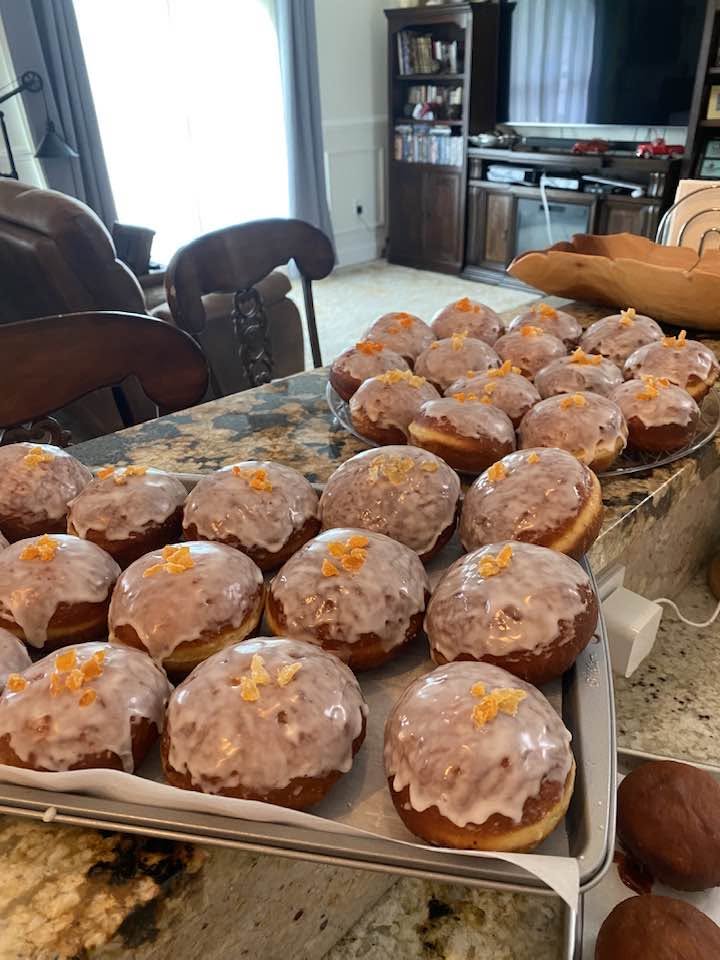
Finish them with a simple powdered sugar glaze and a little candied orange peel for that classic bakery-style appearance.
Whether you’re making these for Pączki Day, Fat Tuesday, or a special family gathering, they’re a wonderful way to bring an old-fashioned Polish baking tradition into your kitchen.
Recipe at a Glance
- Prep Time: 30 minutes
- Rising Time: 70–105 minutes
- Frying Time: Approximately 4 minutes per batch
- Total Time: Approximately 2½–3 hours, depending on batches
- Yield: Approximately 20 pączki
- Difficulty: Intermediate
- Cuisine: Polish
What Are Polish Pączki?
Pączki (pronounced roughly POHNCH-kee) are traditional Polish filled donuts made from a rich, egg-enriched yeast dough.
Unlike ordinary American donuts, pączki are traditionally made with extra egg yolks and butter, giving them a tender, rich interior.
They are usually filled with fruit preserves and finished with powdered sugar or glaze.
One of the most traditional fillings is rose petal jam, although plum preserves are another popular choice.
In Poland, pączki are especially associated with Tłusty Czwartek, or Fat Thursday, celebrated before Lent. In many Polish-American communities, they’re enjoyed on Fat Tuesday.
Why You’ll Love This Homemade Pączki Recipe
- Traditional flavor: Rich dough made with egg yolks, butter, and milk.
- Soft and fluffy texture: Two rising periods help create airy donuts.
- Customizable filling: Choose rose jam, plum preserves, or your favorite thick fruit filling.
- Beautiful glaze: A simple powdered sugar icing creates a classic finish.
- Perfect for celebrations: Wonderful for Fat Thursday, Fat Tuesday, and family gatherings.
Ingredients for Traditional Polish Pączki
For the Yeast Dough
- 4 cups all-purpose flour (500 g, using the original recipe’s weight)
- 1.75 oz fresh yeast (50 g), or 14 g instant yeast
- 7 tablespoons unsalted butter (100 g)
- 1/2 cup granulated sugar (100 g)
- 4 large egg yolks
- 1 large egg
- 1 cup plus 1 tablespoon whole milk (250 ml)
- 1 tablespoon vodka or rum
For the Filling
- Approximately 3/4–1 cup thick rose petal jam or plum preserves, as needed
For Frying
- 1–1½ quarts neutral frying oil, or enough for the donuts to float freely
For the Glaze
- 1 cup powdered sugar
- 1–2 tablespoons hot water, added gradually
- Optional candied orange peel for decorating
Ingredient Notes
Flour: Weighing 500 g is the most reliable option. Cup measurements can vary depending on how flour is measured.
Yeast: The original recipe allows fresh or instant yeast. If using instant yeast, follow the dough preparation method below.
Egg Yolks: Four yolks and one whole egg make the dough rich and tender.
Milk: Use warm milk, not hot milk, to help activate the yeast.
Butter: Melt the butter and allow it to cool slightly before adding it to the dough.
Vodka or Rum: Traditionally used in some Polish pączki recipes. The amount is small and is added to the dough before frying.
Jam: Choose a thick filling that won’t easily leak from the dough. Rose petal jam gives the most traditional flavor, while plum preserves make a delicious alternative.
How to Make Traditional Polish Pączki
Step 1: Prepare the Yeast Starter
Warm the milk until it feels slightly warm to the touch, approximately 100–110°F.
In a bowl, combine the milk, yeast, 1 teaspoon of the measured sugar, and approximately 5 tablespoons of the measured flour.
Stir until combined.
Cover with a clean kitchen towel and leave in a warm place for 10–15 minutes, until the mixture becomes foamy.
If using instant yeast, it can also be mixed directly into the flour, although this recipe follows the original starter method.
Step 2: Prepare the Butter and Eggs
Melt the butter in a small saucepan or microwave-safe bowl. Allow it to cool until warm rather than hot.
Place the egg yolks, whole egg, and remaining sugar in a heatproof mixing bowl.
Set the bowl over a saucepan of gently simmering water, making sure the bottom does not touch the water.
Whisk continuously for approximately 10 minutes until the mixture becomes thick, pale, and fluffy.
Avoid overheating or scrambling the eggs.
Step 3: Make the Dough
Place the remaining flour in a large mixing bowl.
Add the risen yeast starter and whipped egg mixture.
Begin kneading until the ingredients start coming together.
Gradually add the melted butter while continuing to knead.
Finally, add the vodka or rum.
Continue kneading until the dough becomes smooth, stretchy, and elastic.
The dough will be soft and sticky. Avoid adding large amounts of extra flour, which can make the finished donuts heavy.
Step 4: Let the Dough Rise
Cover the bowl with a clean kitchen towel.
Place it in a warm, draft-free area for approximately 40–60 minutes, or until the dough doubles in size.
The dough should look noticeably puffed and airy.
Step 5: Roll and Cut the Dough
Lightly flour your work surface.
Carefully transfer the risen dough onto the surface.
Roll it out to approximately 1 cm thick, a little under 1/2 inch.
Using a round cutter or glass approximately 2¾ inches wide, cut circles from the dough.
Gather and gently reroll the scraps as needed.
Step 6: Add the Filling
Place a small spoonful of thick rose petal jam or plum preserves in the center of half the dough circles.
Cover each filled circle with another dough circle.
Press the edges together carefully to seal.
Make sure there are no openings where the jam could escape during frying.
Step 7: Let the Shaped Donuts Rise
Place the filled donuts on a lightly floured surface or parchment-lined tray.
Cover loosely with a clean towel.
Let rise for approximately 30 minutes, until light and puffy.
Properly risen donuts are important for achieving a fluffy interior.
Step 8: Fry the Polish Donuts
Pour the frying oil into a large, heavy-bottomed pot, leaving plenty of room at the top.
Heat the oil to approximately 350°F (175°C).
Carefully lower a few donuts into the oil, placing the side that faced upward during rising into the oil first.
Fry for approximately 2 minutes on each side, adjusting as necessary until golden brown and cooked through.
Avoid overcrowding the pot.
The oil temperature may drop when the donuts are added, so monitor it with a thermometer.
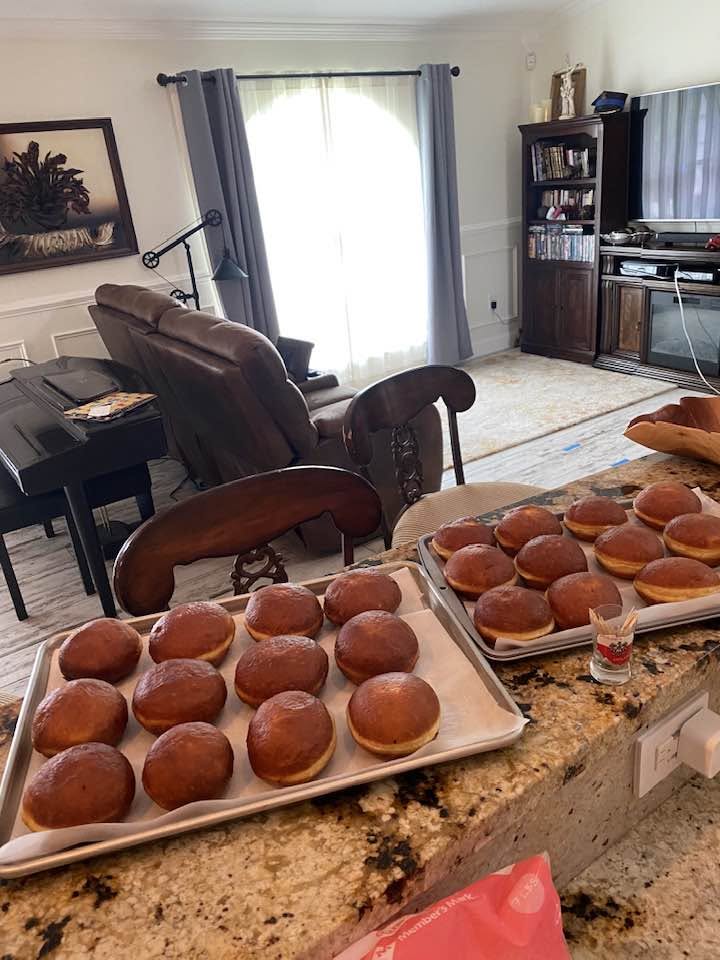
Properly risen pączki often develop a lighter ring around their centers during frying.
Transfer the cooked donuts to a wire rack lined underneath with paper towels.
Step 9: Prepare the Glaze
In a small bowl, whisk together the powdered sugar and a little hot water.
Add the water gradually until the glaze is smooth and thick enough to coat the donuts.
If it’s too thin, add more powdered sugar.
If it’s too thick, add a few additional drops of water.
Step 10: Glaze and Decorate
Allow the fried pączki to cool until warm, not hot.
Dip the tops into the powdered sugar glaze or spoon the glaze over them.
Sprinkle with a little finely chopped candied orange peel, if desired.
Allow the glaze to set before serving.
Tips for Making the Best Polish Pączki
Don’t Add Too Much Flour
The dough is naturally sticky because it contains eggs, milk, and butter.
Adding too much flour can make the donuts dense rather than soft.
Let the Dough Rise Properly
Don’t rush the first or second rise.
The dough should become visibly light and puffy before frying.
Keep the Oil Temperature Steady
If the oil is too hot, the outside may brown before the center cooks.
If it’s too cool, the donuts may absorb excess oil.
Aim for approximately 350°F.
Use Thick Jam
Runny fillings can leak during shaping or frying.
Choose thick rose petal jam or plum preserves.
Seal the Edges Carefully
Because this recipe fills the dough before frying, properly sealed edges are especially important.
Common Pączki Problems
Why Are My Pączki Dense?
The dough may not have risen enough, or too much flour may have been added.
Why Are My Donuts Raw Inside?
The frying oil may be too hot, causing the exterior to brown too quickly. The donuts may also be too large or thick.
Why Did My Filling Leak?
The dough circles may not have been sealed tightly, or the filling may have been too thin.
Why Are My Pączki Greasy?
The frying oil may have been too cool. Use a thermometer and fry in small batches.
Popular Polish Pączki Fillings
Rose Petal Jam: A traditional Polish filling with a distinctive floral sweetness.
Plum Preserves: Rich, fruity, and slightly tart.
Raspberry Jam: A delicious alternative with a bright fruit flavor.
Strawberry Jam: A sweeter option that’s especially popular with children.
Custard: A creamy filling, best piped into fully cooked and cooled donuts.
How to Store Polish Pączki
Room Temperature: Unfilled-with-custard fruit-jam pączki are best enjoyed fresh, ideally the day they’re made. Store in an airtight container for up to 1–2 days.
Refrigerator: Refrigeration can dry out yeast donuts, but perishable cream- or custard-filled versions must be refrigerated.
Freezer: Freeze completely cooled, preferably unglazed pączki in airtight packaging for up to 2 months for best quality.
Reheating: Warm briefly in the microwave or low oven. Add fresh glaze afterward if needed.
Traditional Polish Pączki With Rose or Plum Filling
Ingredients
- 500 g all-purpose flour approximately 4 cups
- 50 g fresh yeast or 14 g instant yeast
- 100 g unsalted butter approximately 7 tablespoons
- 100 g granulated sugar approximately 1/2 cup
- 4 large egg yolks
- 1 large egg
- 250 ml whole milk approximately 1 cup plus 1 tablespoon
- 1 tablespoon vodka or rum
- Filling
- 3/4 –1 cup thick rose petal jam or plum preserves as needed
- Frying
- 1 –1½ quarts neutral frying oil or enough for deep frying
- Glaze
- 1 cup powdered sugar
- 1 –2 tablespoons hot water as needed
- Candied orange peel optional
Instructions
- Combine warm milk, yeast, 1 teaspoon sugar, and 5 tablespoons flour. Cover and let rise for 10–15 minutes.
- Melt butter and allow it to cool slightly.
- Whisk egg yolks, whole egg, and remaining sugar in a heatproof bowl over gently simmering water for approximately 10 minutes until pale and fluffy.
- Combine remaining flour, yeast starter, and egg mixture.
- Knead while gradually adding melted butter. Add vodka or rum and knead until elastic.
- Cover and rise for 40–60 minutes, until doubled.
- Roll dough to approximately 1 cm thick and cut 7 cm circles.
- Fill half the circles with thick jam and cover with the remaining circles. Seal edges.
- Cover and rise for approximately 30 minutes.
- Heat oil to 350°F. Fry donuts in batches for approximately 2 minutes per side, until golden and cooked through.
- Drain on a wire rack.
- Mix powdered sugar with hot water to make a glaze.
- Glaze the warm donuts and decorate with candied orange peel if desired.
Notes