Homemade Panettone Recipe (Soft Italian Christmas Bread)
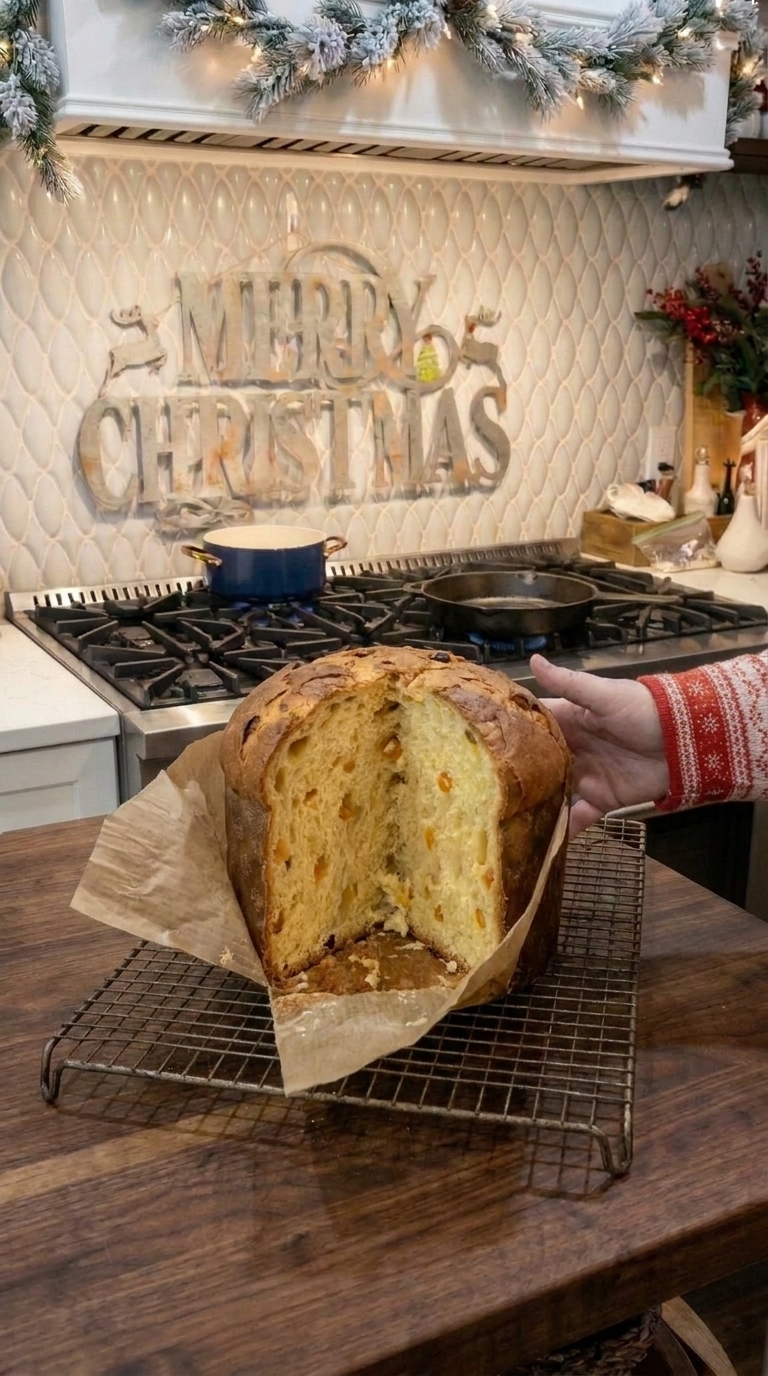
This homemade panettone recipe makes a beautiful Italian Christmas bread with a soft, buttery crumb, sweet raisins, candied orange peel, and fresh citrus zest. Baked in a tall paper mold, it’s a wonderful holiday breakfast, homemade Christmas gift, or special treat to enjoy with coffee.
If you’ve ever admired those beautifully wrapped boxes of panettone at the grocery store during the holidays, you might be surprised to learn that you can make a delicious version in your own kitchen.
This recipe uses active dry yeast, everyday baking ingredients, and a stand mixer to make the process more manageable. It does require patience, especially during rising, but the reward is a golden loaf filled with wonderful holiday flavors.
Quick Recipe Details
- Prep time: About 45 minutes
- Rise time: Overnight refrigeration plus 2–3 hours for the final rise, or longer as needed
- Bake time: 40–45 minutes, approximately
- Yield: 1 large loaf
- Servings: 12
- Skill level: Intermediate
- Baking temperature: 350°F (175°C)
What Is Panettone?
Panettone is a traditional Italian sweet bread especially popular during Christmas and New Year’s celebrations.
Originally associated with Milan, panettone is known for its tall, rounded shape, golden crust, and light, delicate interior. Traditional versions are often filled with raisins and candied citrus peel.
Unlike an ordinary loaf of bread, panettone contains butter, eggs, and sugar. These ingredients create a richer dough and give the finished bread its distinctive flavor.
Authentic Italian panettone is often made with a natural starter and a more involved fermentation process. This homemade version uses commercial yeast to make holiday baking more approachable.
The result is a citrus-scented, buttery holiday bread inspired by the classic Italian favorite.
Why You’ll Love This Homemade Panettone
There are plenty of reasons to make panettone from scratch, especially during the Christmas baking season.
Wonderful holiday flavor. Fresh orange zest, lemon zest, vanilla, and candied orange peel give this bread its signature festive aroma.
Soft, buttery texture. Eggs and butter enrich the dough, while proper kneading and rising help develop a tender crumb.
Beautiful presentation. A tall panettone loaf looks impressive on a holiday breakfast table or wrapped as a homemade gift.
Great for making ahead. An overnight refrigerator rise lets you spread the preparation across two days.
Delicious leftovers. Extra slices can become French toast, bread pudding, or a simple toasted breakfast.
Ingredients for Homemade Panettone
One of the secrets to a flavorful panettone is using fresh ingredients and measuring them carefully.
For the Dough
- 1/2 cup warm milk
- 2 1/4 teaspoons active dry yeast (one standard packet)
- 1/3 cup granulated sugar, divided
- 3 large eggs, at room temperature
- 1 teaspoon vanilla extract
- 1 tablespoon freshly grated orange zest
- 1 tablespoon freshly grated lemon zest
- 3 1/2 cups all-purpose flour
- 1 teaspoon salt
- 1/2 cup unsalted butter, softened
For the Fruit Filling
- 1 cup raisins
- 1/2 cup candied orange peel
Optional Finishing Touch
- A small pat of butter for the top
Ingredient Notes and Substitutions
Flour: All-purpose flour is used in this recipe. Bread flour can provide additional strength, although the dough may need slight adjustments.
Yeast: Active dry yeast is easy to find in most grocery stores. Check the expiration date before baking.
Butter: Use softened butter rather than melted butter. Butter that is too warm can make enriched dough greasy and difficult to handle.
Orange and lemon zest: Fresh zest adds fragrant citrus oils without extra liquid. Avoid grating the bitter white pith.
Raisins: Regular or golden raisins both work. Soaking them briefly makes them plumper and softer.
Candied orange peel: Look for it in the holiday baking section or at specialty grocery stores.
Equipment You’ll Need
You don’t need professional bakery equipment, but a few tools make the process easier.
- Stand mixer with dough hook
- Large mixing bowl
- Measuring cups and spoons
- Rubber spatula
- 6-inch-wide, 4-inch-tall panettone paper mold
- Instant-read thermometer
- Wire cooling rack
- Long metal skewers for inverted cooling, if needed
A stand mixer is especially helpful because this enriched dough needs thorough kneading to develop strength.
How to Make Homemade Panettone Step by Step
Making panettone is easier when you divide the process into stages: mixing the dough, developing the gluten, rising, adding the fruit, shaping, proofing, and baking.
The most important thing to remember is that enriched dough rises more slowly than ordinary bread dough. Watch the dough itself rather than relying only on the clock.
Step 1: Activate the Yeast
Pour the warm milk into the bowl of your stand mixer.
Add the active dry yeast and 1 teaspoon of the measured granulated sugar.
Stir gently and let the mixture stand for about 10 minutes.
The surface should become foamy or bubbly, indicating that the yeast is active.
Baking tip: The milk should feel comfortably warm, not hot. Aim for approximately 100–110°F (38–43°C).
Step 2: Mix the Dough
Add the remaining sugar, eggs, vanilla extract, orange zest, and lemon zest to the yeast mixture.
Mix until combined.
Add the flour and salt, then attach the dough hook.
Mix on low speed until a rough dough begins to form.
At this stage, the dough may look slightly sticky and uneven. That’s normal.
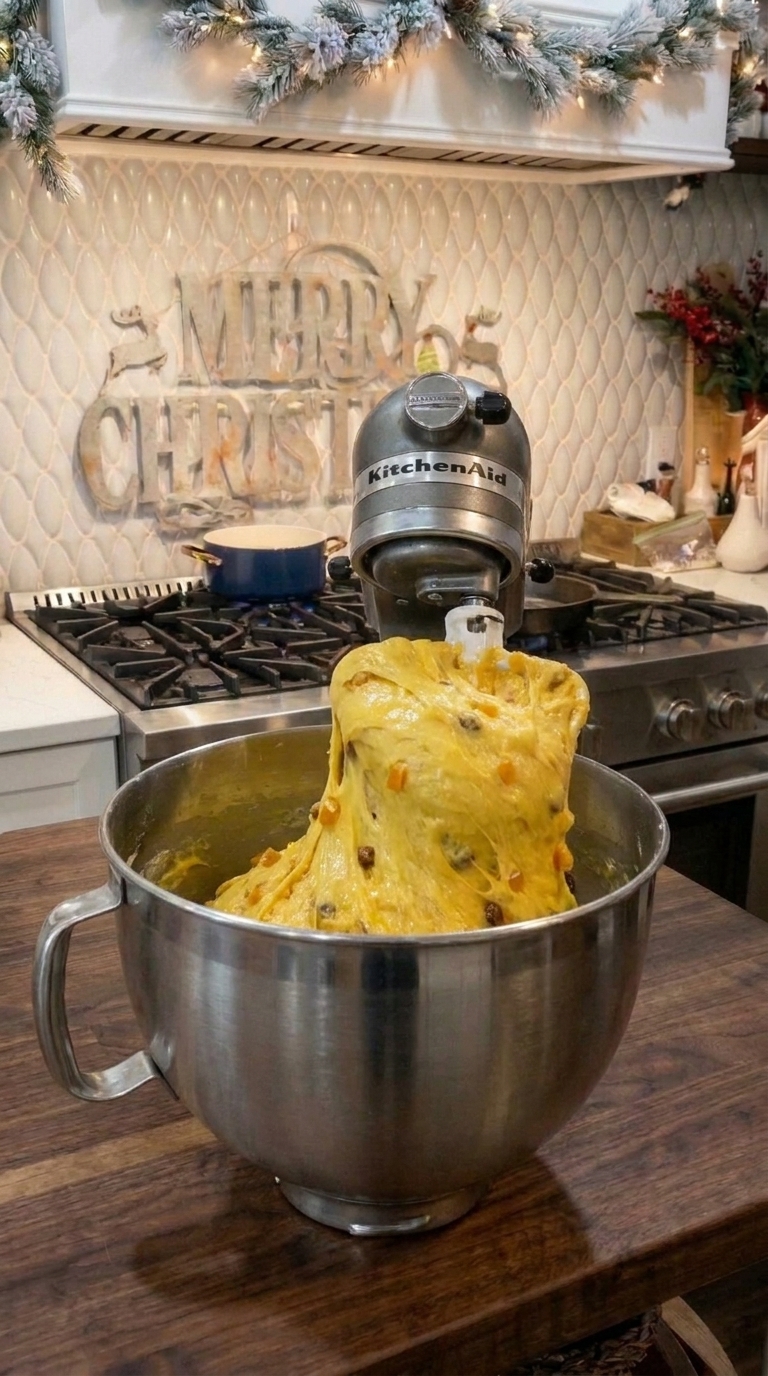
Step 3: Knead and Add the Butter
With the mixer running on low speed, add the softened butter one tablespoon at a time.
Allow each addition to blend into the dough before adding more.
Continue kneading for approximately 10 minutes after incorporating the butter, or longer if necessary.
The dough should become smoother, stretchier, and more elastic.
A properly developed dough can stretch into a thin membrane before tearing. This is commonly called the windowpane test.
Important: Avoid adding large amounts of extra flour simply because the dough feels sticky. Rich doughs are naturally softer than standard sandwich bread dough.
Step 4: Let the Dough Rise
Transfer the dough to a lightly greased bowl and cover it tightly.
For an overnight method, refrigerate the covered dough for approximately 8–12 hours. It may rise slowly in the refrigerator, and it does not necessarily need to double.
Alternatively, let the dough rise at room temperature for approximately 3 hours, or until noticeably expanded. The actual time depends on the room temperature and yeast activity.
The overnight method is convenient because it divides the baking process into two days.
Step 5: Prepare the Raisins and Candied Orange Peel
If your raisins feel dry, soak them in warm water for about 20–30 minutes.
Drain thoroughly and pat them dry with paper towels.
Excess moisture can affect the dough, so don’t skip the drying step.
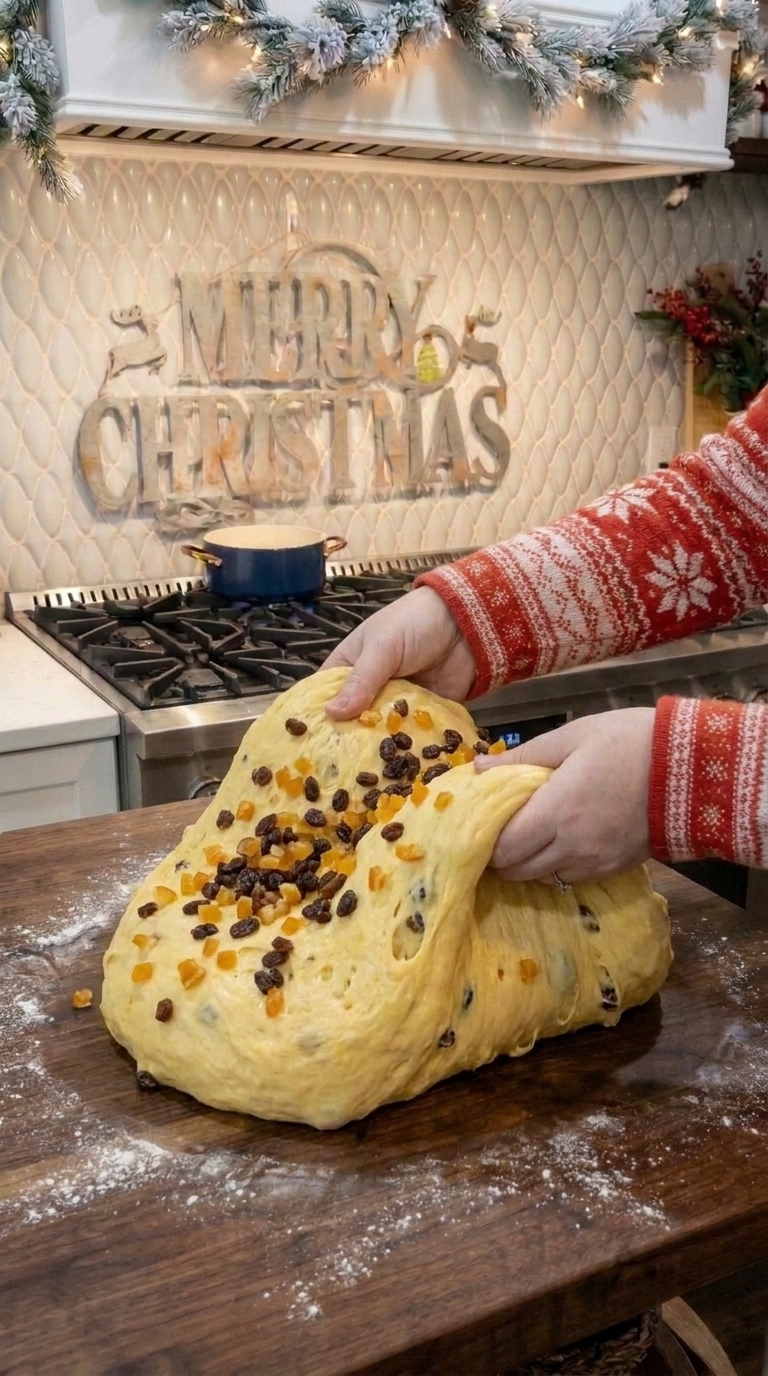
Gently deflate the risen dough and turn it onto a lightly floured work surface.
Scatter the raisins and candied orange peel over the dough.
Fold and gently knead until the fruit is distributed evenly.
Step 6: Shape the Panettone
Gather the dough into a smooth ball, tucking the edges underneath to create surface tension.
Place it seam-side down in a food-safe, oven-ready panettone paper mold.
The dough should sit comfortably inside the mold with enough space to rise.
Important: Panettone molds vary in capacity. Use a mold large enough for the dough rather than forcing it into a smaller one.
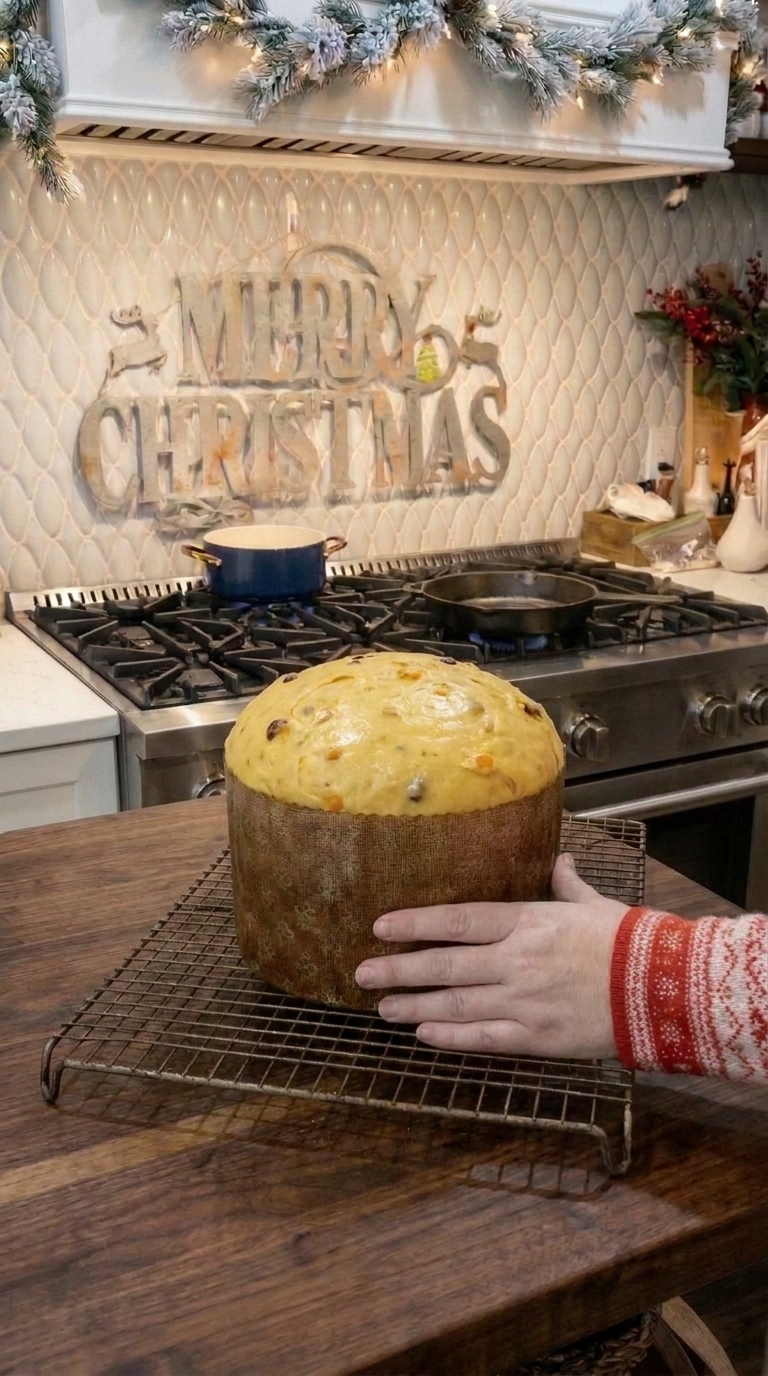
Step 7: Let the Dough Rise Again
Loosely cover the mold with lightly greased plastic wrap.
Place it in a warm, draft-free location and let the dough rise for approximately 2–3 hours, or longer if necessary.
The dough should become noticeably puffy and approach the top of the mold.
Avoid rushing this step. Underproofed dough may split unpredictably during baking, while overproofed dough can lose its strength.
Step 8: Score and Bake
Preheat the oven to 350°F (175°C).
Using a sharp blade, carefully score a shallow X across the top of the dough.
Place a small pat of butter in the center of the X.
Bake for approximately 40–45 minutes, checking the loaf toward the end of the baking time.
If the top begins to brown too quickly, loosely cover it with aluminum foil.
Because panettone is tall and rich, checking the center with an instant-read thermometer is more reliable than judging by crust color alone.
Aim for an internal temperature of approximately 190–195°F (88–91°C).
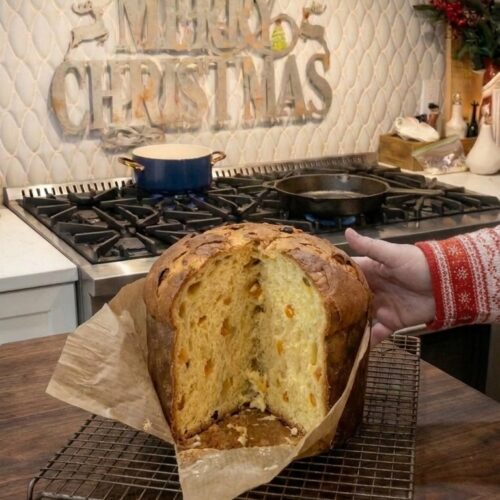
Step 9: Cool the Panettone Properly
This is an important step that deserves extra attention.
Traditional panettone is often cooled upside down because its delicate structure can collapse while warm.
If your loaf is tall and very soft, insert two sturdy metal skewers horizontally through the lower portion of the loaf and suspend it upside down between stable supports.
Make sure the supports are secure and the loaf cannot fall.
Allow it to cool completely before removing the skewers or slicing.
A sturdier, shorter loaf may hold its shape while cooling upright on a wire rack, but inverted cooling is the more reliable approach for a tall panettone.
How to Know When Panettone Is Perfectly Baked
Panettone can look beautifully golden on the outside while still being underbaked in the center.
Look for these signs:
- The top is deeply golden brown.
- The loaf has risen well and holds its shape.
- The center reaches approximately 190–195°F.
- The crumb is fully set after cooling.
Avoid slicing the loaf while it’s hot. The interior needs time to stabilize, and cutting too early can make the crumb appear gummy.
Common Panettone Mistakes and How to Avoid Them
1. The Dough Isn’t Rising
Enriched dough contains butter, sugar, and eggs, which can slow yeast activity.
Make sure your yeast is fresh and the dough is resting in a suitable environment.
Cold dough may need extra time to warm up before the final rise becomes noticeable.
2. The Panettone Is Dense
Dense panettone can result from insufficient kneading, too much flour, or inadequate proofing.
The dough should be elastic before shaping, and it needs enough time to rise properly.
3. The Bread Collapses After Baking
A collapsed loaf may have been underbaked, overproofed, or insufficiently supported while cooling.
Check the internal temperature and consider cooling the loaf upside down.
4. The Fruit Sinks to the Bottom
Wet fruit can create uneven pockets in the dough.
Drain and dry soaked raisins thoroughly, then distribute the fruit evenly before shaping.
5. The Top Browns Too Quickly
If the crust darkens before the center is baked, loosely tent the loaf with aluminum foil.
Continue baking until the center reaches the proper temperature.
Panettone Variations to Try
Once you’re comfortable making the original recipe, there are several delicious ways to change the flavor.
Chocolate Chip Panettone
Replace the raisins and candied orange peel with approximately 1 1/2 cups of chocolate chips or chopped chocolate.
This is a popular option for anyone who prefers chocolate over dried fruit.
Cranberry Orange Panettone
Use dried cranberries instead of raisins and keep the candied orange peel.
The tart cranberries balance the sweetness of the bread.
Cranberry Almond Panettone
Replace the raisins with dried cranberries and add 1/2 cup sliced almonds.
The almonds add a little crunch to the soft bread.
Spiced Christmas Panettone
Add 1/2 teaspoon ground cinnamon, 1/4 teaspoon cardamom, and a pinch of nutmeg to the flour.
This creates a warm, holiday-spiced variation.
What to Serve With Panettone
Panettone is wonderful on its own, especially when freshly sliced.
For Christmas morning, serve it with hot coffee, cappuccino, or homemade hot chocolate.
You can also lightly toast individual slices and spread them with softened butter.
For dessert, try serving panettone with sweetened mascarpone cream, whipped cream, or fresh berries.
Delicious Ways to Use Leftover Panettone
Don’t throw away leftover slices when the bread starts to dry out.
Panettone French toast: Dip thick slices in a mixture of eggs, milk, cinnamon, and vanilla, then cook until golden.
Panettone bread pudding: Cut leftover bread into cubes and bake it with a sweet custard.
Toasted panettone: Lightly toast a slice and serve with butter or fruit preserves.
Panettone trifle: Layer cubes of bread with custard, whipped cream, and berries for an easy holiday dessert.
How to Store Homemade Panettone
Proper storage helps preserve the soft texture.
At Room Temperature
Allow the bread to cool completely, then wrap it tightly in plastic wrap or place it in an airtight container.
Store at room temperature for approximately 3–4 days.
In the Refrigerator
Refrigeration is generally not recommended because bread tends to stale faster at refrigerator temperatures.
For longer storage, freezing is usually the better choice.
In the Freezer
Wrap the loaf or individual slices tightly and place them in a freezer-safe bag.
Freeze for up to 2 months for best quality.
Thaw at room temperature before serving.
How to Reheat Panettone
Warm individual slices briefly in a toaster oven or microwave.
Avoid overheating, which can dry out the bread.
Frequently Asked Questions About Homemade Panettone
Is panettone a bread or a cake?
Panettone is a yeast-leavened sweet bread. Although it’s rich and sweet, its preparation is closer to bread baking than traditional cake baking.
What is the difference between panettone and brioche?
Both are enriched breads made with ingredients such as eggs and butter. Panettone is traditionally taller, contains citrus and dried fruit, and is known for its especially light, airy structure.
Can I make panettone without a stand mixer?
Yes, but kneading enriched dough by hand requires more time and effort. The dough is sticky and needs thorough gluten development.
Can I use bread flour instead of all-purpose flour?
Yes. Bread flour has more protein and can provide additional structure, although the dough may behave differently and need small adjustments.
Do I need a special panettone mold?
A tall paper panettone mold gives the bread its recognizable shape.
If you don’t have one, use a suitable oven-safe baking pan lined with parchment paper, leaving enough room for the dough to rise.
Avoid using an ordinary coffee can unless it is specifically confirmed to be food-safe and oven-safe.
Why is my homemade panettone dry?
Dry panettone can result from overbaking, too much flour, or improper storage.
Measure your flour carefully and use an instant-read thermometer to check for doneness.
Can I make panettone ahead of Christmas?
Yes. You can prepare the dough using the overnight method, or bake the finished loaf ahead and freeze it until needed.
Can I make panettone without raisins?
Absolutely. Replace them with chocolate chips, dried cranberries, or another suitable filling.
How long does homemade panettone take to make?
Plan for two days if you’re using the overnight refrigerator method. Most of that time is inactive rising and cooling time.
Can panettone be frozen?
Yes. Wrap it well, freeze for up to 2 months for best quality, and thaw before serving.
More Christmas Baking Recipes to Try
If you enjoy making homemade holiday treats, these recipes are also worth adding to your Christmas baking list:
- Classic Old-Fashioned Spritz Butter Cookies
- Stained Glass Window Cookies
- Little Debbie Christmas Tree Cake Balls
- Fudgy Brownie Mix Crinkle Cookies
Final Thoughts
Homemade panettone is one of those holiday baking projects that feels especially rewarding when it comes out of the oven.
From the sweet smell of orange zest and vanilla to the beautiful golden crust, every stage is part of the experience.
Whether you’re making it for Christmas breakfast, wrapping it as a gift, or enjoying a slice with your afternoon coffee, this Italian-inspired holiday bread is a lovely addition to your Christmas baking traditions.
Have you ever made homemade panettone, or do you usually buy it during the holidays?
Homemade Panettone (Italian Christmas Bread)
Ingredients
- 1/2 cup warm milk
- 2 1/4 teaspoons active dry yeast
- 1/3 cup granulated sugar divided
- 3 large eggs room temperature
- 1 teaspoon vanilla extract
- 1 tablespoon orange zest
- 1 tablespoon lemon zest
- 3 1/2 cups all-purpose flour
- 1 teaspoon salt
- 1/2 cup unsalted butter softened
- 1 cup raisins
- 1/2 cup candied orange peel
- Small pat of butter for topping optional
Instructions
- Combine warm milk, yeast, and 1 teaspoon sugar in the bowl of a stand mixer. Rest for 10 minutes until foamy.
- Add the remaining sugar, eggs, vanilla, orange zest, and lemon zest. Mix well.
- Add flour and salt. Mix with the dough hook until a rough dough forms.
- Gradually add softened butter, one tablespoon at a time.
- Knead for approximately 10 minutes or until the dough becomes smooth and elastic.
- Transfer to a greased bowl, cover, and refrigerate overnight for approximately 8–12 hours. Alternatively, let rise at room temperature until noticeably expanded.
- Drain and thoroughly dry the raisins if soaked. Gently fold the raisins and candied orange peel into the dough.
- Shape into a smooth ball and place in a suitably sized panettone mold.
- Cover loosely and let rise until puffy and near the top of the mold, approximately 2–3 hours or longer.
- Preheat oven to 350°F (175°C).
- Score a shallow X on top and add a small pat of butter if desired.
- Bake for approximately 40–45 minutes or until golden and the internal temperature reaches 190–195°F (88–91°C).
- Cool completely, preferably inverted if the loaf is tall and delicate, before slicing.