Old Fashioned Baked Sweet Potatoes — A Sweet Vintage Comfort
The quiet stillness of a house at three o’clock in the morning carries a unique kind of peace. When the rest of the world is deeply asleep, the kitchen becomes a sanctuary where small acts of devotion take place under the soft glow of the stove light. Just the other night, a gentle shuffling down the hallway broke the silence. It was my sweet father, wide awake and looking for a little something to satisfy a midnight craving for sweetness. In moments like those, you do not reach for modern packaged snacks or processed treats; you turn to the honest, grounding staples that have comforted families for generations.
I pulled two plump, earth-covered sweet potatoes from the pantry bin, feeling the rough texture of their skins under the faucet. There is an unspoken language in preparing a classic treat for someone you love in the middle of the night. As the kitchen began to warm up, I felt a deep connection to the generations of home cooks who came before us, who stood over hot hearths and wood-burning stoves to nourish their loved ones with the simplest fruits of the soil.
When I shared a little reflection about this late-night kitchen session with our lovely Old Fashioned Family Recipes Facebook community, so many of you replied with your own beautiful memories of cooking for aging parents or comforting restless grandchildren in the wee hours of the morning. It seems that a perfectly roasted sweet potato, split open and glistening with melted butter, is a universal symbol of home. Let us look at how to slow-roast these beautiful roots to achieve that deep, caramelized texture that turns a simple ingredient into pure nostalgia.
Why this recipe works
-
The High-Heat Caramelization Process: Baking the roots at a sustained high temperature allows the natural sugars within the flesh to break down and liquefy, creating a built-in syrup that bubbles up and candies the skin.
-
The Steam-and-Split Venting Technique: Piercing the skin deeply before baking ensures steam escapes evenly, preventing the root from becoming waterlogged and producing a remarkably fluffy internal texture.
-
The Deep-Pocket Butter Melting: Scoring the vibrant orange flesh immediately after splitting allows the cold pats of butter to drop into the core, melting from the inside out to enrich every single bite.
-
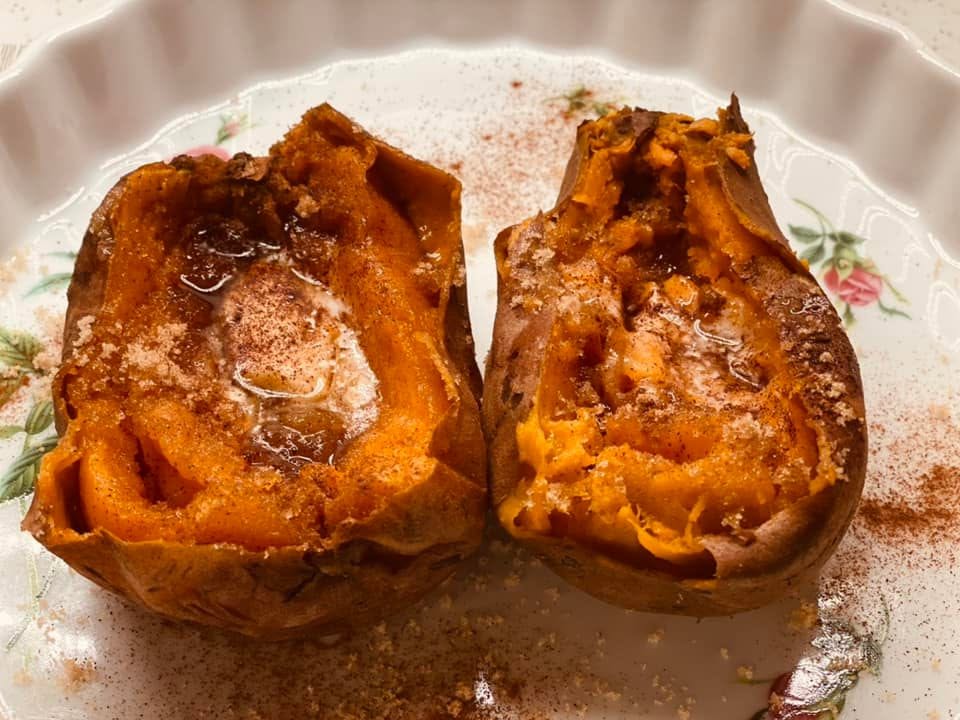
The Residual-Heat Sugar Melting: Dusting the brown sugar and ground cinnamon onto the steaming, freshly opened flesh utilizes the residual heat to dissolve the granules into a glistening, caramelized glaze without needing extra oven time.
What you’ll need
This traditional treat requires very little from your grocery list, relying instead on high-quality basics that sit beautifully in a cool larder.
-
Firm Sweet Potatoes: Look for plump roots with smooth, unblemished skins; the red or purple-skinned varieties hide a deep orange interior that yields the sweetest results.
-
Unsalted Farmhouse Butter: Using a thick pat of real butter adds a luxurious, creamy fat that balances the natural sugars perfectly.
-
Dark Brown Sugar: The presence of molasses in dark brown sugar provides a rich, caramel-like depth that white sugar simply cannot match.
-
Ground Cinnamon: A heavy hand of fragrant cinnamon cuts through the richness and fills your home with an unforgettable, warming aroma.
-
Coarse Sea Salt: A tiny, subtle pinch highlights the sweetness and grounds the dish in traditional style.
Substitutions & Variations
While the vintage combination of butter and brown sugar is timeless, you can easily adapt this to what you have on hand in your own kitchen cupboard. If dairy is a concern for your loved ones, a spoonful of unrefined coconut oil or a quality plant-based butter substitute can be used to achieve that same glistening interior. For a deeper, woodland flavor, you can swap the dark brown sugar for a generous drizzle of pure maple syrup or raw local honey. If you want to lean further into a holiday style, a small handful of chopped pecans or a sprinkle of mini marshmallows can be popped on top during the final five minutes of baking until toasted and bubbling.
How to make Old Fashioned Baked Sweet Potatoes
Step 1: Prep and Scrub the Roots
Preheat your oven to 400°F and line a heavy baking sheet or a seasoned cast iron skillet with a piece of parchment paper to catch the sugary juices that will inevitably escape. Take your sweet potatoes to the sink and scrub the skins thoroughly with a stiff vegetable brush under cool running water to remove any lingering soil. Pat them completely dry with an old cloth towel. Using the tines of a sturdy vintage fork, pierce the skin of each potato several times on all sides; this simple step prevents the skins from bursting as the internal steam builds during roasting.
Step 2: Roast Until Caramels Form
Place the prepared roots directly onto your lined baking sheet or into your iron skillet, leaving plenty of space between them so the hot air can circulate freely. Slide the pan into the center rack of your oven and let them bake undisturbed for roughly fifty to sixty minutes. As they cook, your kitchen will fill with a rich, caramelized scent. You will know they are ready when the skins look slightly wrinkled and loose, and a sharp knife slips into the center with absolutely zero resistance.
Step 3: Split and Score the Flesh
Carefully remove the hot pan from the oven. Using a clean kitchen towel to protect your hands from the hot steam, place each sweet potato into a scalloped serving dish or a vintage pie plate. Take a sharp paring knife and slice a deep line down the center of each root, stopping just short of cutting them completely in half. Use your fingers to gently press the outer ends inward, forcing the vibrant orange interior to pop open and bloom outward, creating a deep well in the center.
Step 4: Layer the Butter and Sweetness
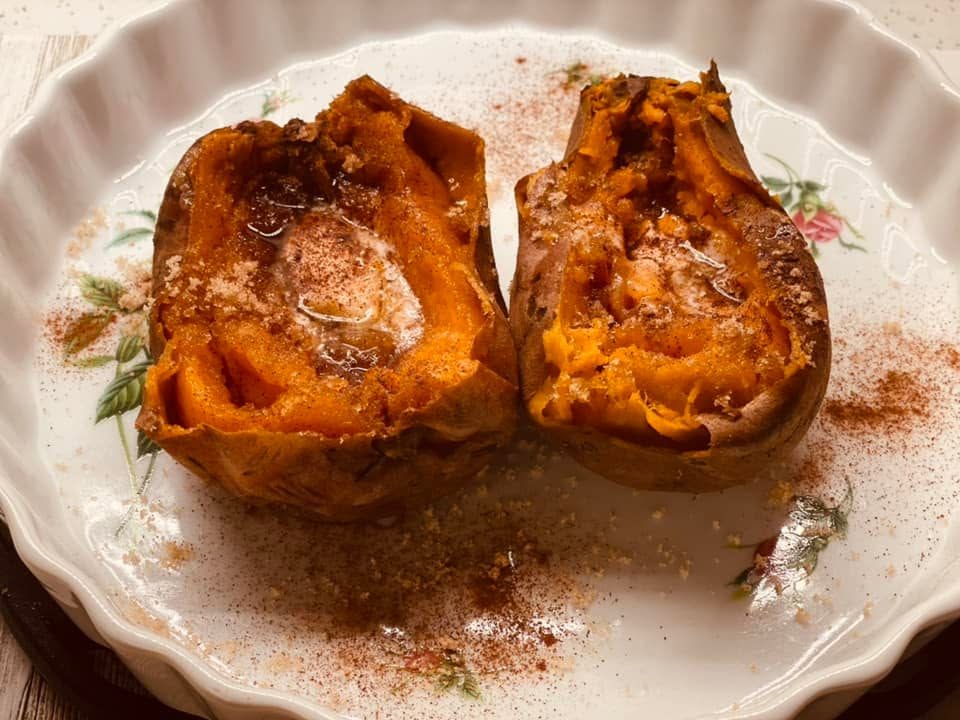
Immediately drop a generous pat of cold farmhouse butter right into the steaming center of each split potato, watching it liquefy into the hot orange flesh. While the butter is pooling, use a small spoon to sprinkle a heavy layer of dark brown sugar across the entire exposed surface. The heat rising from the root will instantly begin to dissolve the sugar granules into a rich, dark syrup.
Step 5: The Final Cinnamon Dusting
Finish the dish by dusting a generous pinch of ground cinnamon directly over the melting sugar and butter, letting the spice settle into the nooks and crannies. Add a tiny, microscopic pinch of coarse sea salt if you like to contrast the sweetness. Allow the assembled sweet potatoes to sit for two minutes before serving, giving the flavors time to fuse into a velvety, spoonable comfort that is ready to warm a loved one’s heart.
Destiny’s tips
-
I always choose medium, evenly shaped roots for baking: Super large sweet potatoes take far too long to cook through to the center, while smaller, uniform shapes roast evenly and offer the perfect individual serving size.
-
In my kitchen, we never wrap the potatoes in aluminum foil: Wrapping them traps the moisture and steams the skin; baking them completely bare allows the natural sugars to seep through and caramelize beautifully against the heat.
-
I always look for the sugary bubbles as a sign of doneness: When you see dark, syrupy bubbles escaping from the fork holes and caramelizing on the pan, you know the interior sugars have broken down perfectly.
-
In my kitchen, the skin is never thrown away: If you roast them bare, the sticky, sweet skin becomes incredibly flavorful and chewy, and it is my absolute favorite part to enjoy with a little extra butter.
What to serve with Old Fashioned Baked Sweet Potatoes
-
Skillet Fried Chicken: The salty, crispy crunch of heritage fried chicken provides an incredible contrast to the soft, melting sweetness of the roasted root.
-
Crisp Apple and Walnut Salad: A bright, refreshing salad tossed with tart apple slices, bitter greens, and toasted walnuts cuts through the rich molasses notes beautifully.
-
Smoky Cast Iron Pork Chops: Thick-cut pork chops seared in iron with plenty of black pepper and sage create a wonderful, savory companion on the dinner plate.
Frequently Asked Questions
Can I bake these ahead of time and reheat them?
You can easily roast the sweet potatoes ahead of time and keep them stored in a covered Pyrex container in your refrigerator for up to four days. When you are ready to serve, simply place them back into a warm oven or a covered skillet on the stovetop until heated through, then split them open and add your fresh toppings.
Why did my sweet potato turn out watery instead of fluffy?
A watery interior usually happens when the potato is steamed rather than roasted, or if the oven temperature was set too low. Baking at a high heat of 400°F without any foil wraps ensures that excess moisture evaporates, leaving behind a concentrated, fluffy, and sweet interior.
What is the difference between a yam and a sweet potato?
In most American grocery stores, the items labeled as yams are actually just a variety of sweet potato with darker skin and a sweeter, more orange flesh. True yams are native to Africa and Asia, feature a rough, bark-like skin, and are much more starchy and dry rather than sweet and moist.
How can I make the sugar glaze stay warm longer?
If you are serving these to someone who takes their time eating, you can pop the fully loaded sweet potatoes back into the hot oven for just two minutes after adding the sugar and butter to create a bubbling, molten glaze that holds its heat beautifully.
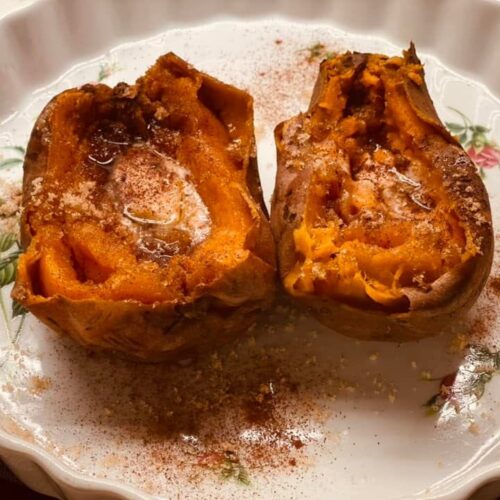
Old Fashioned Baked Sweet Potatoes
Ingredients
- 2 medium orange-fleshed sweet potatoes
- 3 tbsp unsalted farmhouse butter
- 3 tbsp dark brown sugar
- 1/2 tsp ground cinnamon
- 1 pinch coarse sea salt
Instructions
- Preheat the oven to 400°F and line a baking sheet or cast iron skillet with parchment paper.
- Scrub the sweet potatoes thoroughly, pat dry, and pierce the skins multiple times with a sturdy fork.
- Place the bare potatoes on the pan and roast for 50-60 minutes until the center is incredibly soft.
- Remove from heat and place into a vintage serving dish, using a paring knife to slice a deep vent down the middle.
- Push the ends inward to pop the bright orange flesh open, creating a deep pocket.
- Drop the cold pats of butter directly into the steaming center to melt completely.
- Sprinkle the dark brown sugar and a heavy dust of cinnamon over the top, letting the residual heat create a glistening glaze.
Notes