Old Fashioned Buttermilk Biscuits and Sausage Gravy Combo
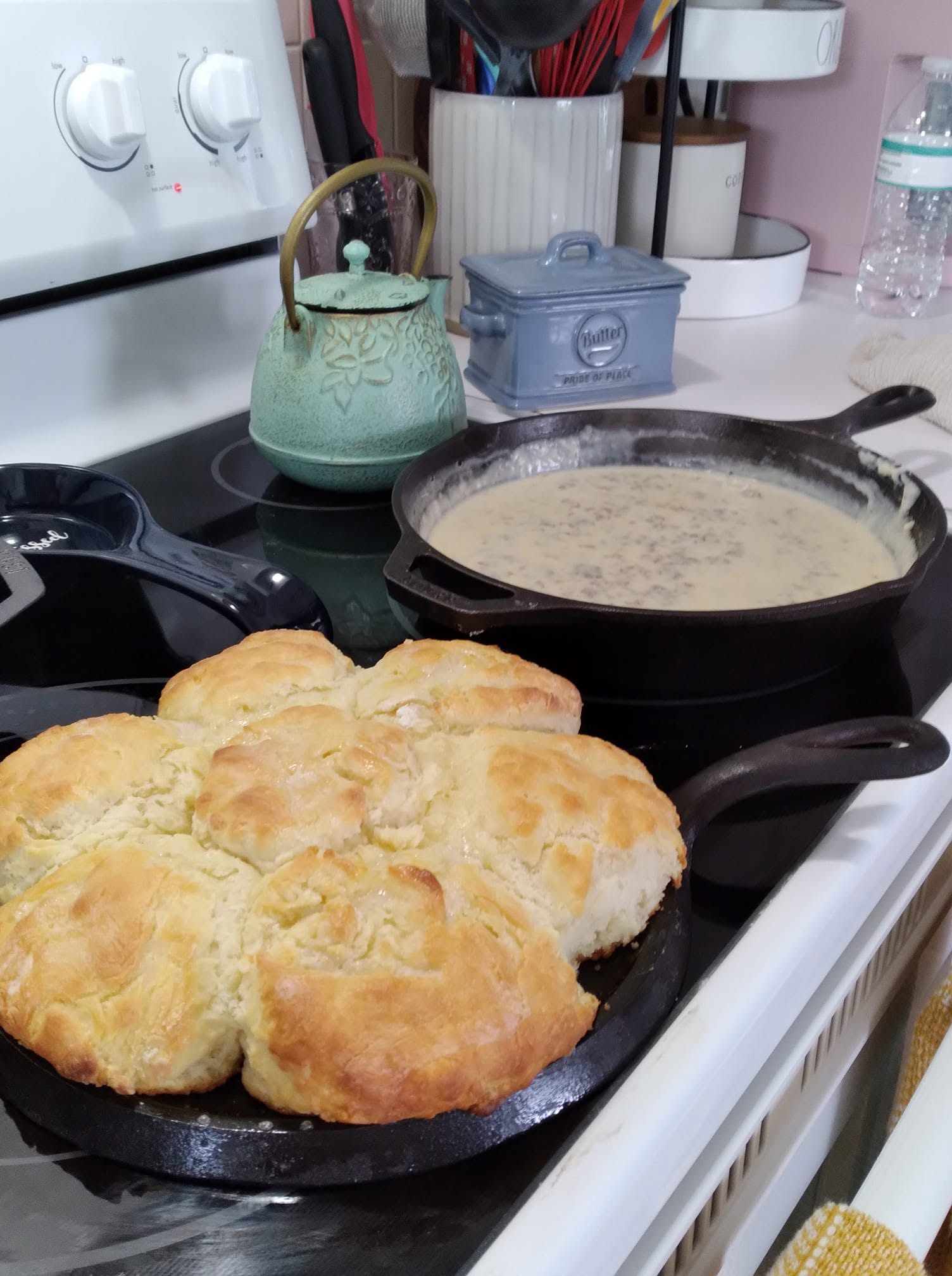
The heavy thud of a seasoned cast iron skillet meeting the stovetop burner is a sound that instantly centers me. Long before modern non-stick coatings and chemical-laden cooking sprays found their way into American homes, our grandmothers relied on these heavy black iron vessels to turn simple pantry staples into pure magic. There is a deep, comforting rhythm to standing over a hot stove on a crisp morning, watching a rich cream gravy slow-bubble while a ring of high-rising biscuits bakes to a perfect golden tan in a companion skillet. That iron does more than just hold heat; it holds decades of seasoned memories, seasoned fat, and the unspoken love of the hands that cooked before us.
Recently, a few wonderful ladies in our Old Fashioned Family Recipes Facebook community were sharing their deepest secrets for achieving a perfectly smooth, velvety country gravy without it turning paste-like or breaking into an oily mess. It reminded me so much of the meticulous method my grandmother used to teach me. She always insisted that the secret to a proper heritage breakfast lay entirely in the patience of the stir and the temperature of the buttermilk.
When you slice into one of these tall, flaky biscuits—baked tucked close together so they climb skyward instead of spreading out thin—and ladle a heavy, piping-hot scoop of seasoned pork gravy over the top, the modern world and all its frantic pace simply melt away. This is honest, unpretentious farmhouse cooking at its absolute finest. Let us pull out those family heirlooms, dust off the rolling board, and recreate a sensory breakfast experience that feels like a warm hug from the past.
Why this recipe works
-
The Searing and Fond Extraction: Searing the premium pork sausage directly in a hot cast iron skillet coaxes out the highly flavorful fat while leaving behind a beautiful network of deeply browned bits—the fond—stuck to the bottom of the iron. This serves as the savory building block for the entire gravy.
-
The Equal-Ratio Roux Binding: Stirring the all-purpose flour directly into the hot, rendered sausage fat over medium heat creates an authentic country roux. This process cooks out the raw flour taste while ensuring the starch molecules are perfectly coated in fat, preventing lumps from forming when the liquid is introduced.
-
The Pull-Apart Skillet Clustering: Arranging the cut biscuit rounds so their edges just graze one another in a seasoned cast iron pan forces the dough to rise straight up instead of expanding outward. This traditional arrangement keeps the sides of the biscuits incredibly tender and soft while creating a beautifully golden, continuous crust across the top.
-
The Gradual Temperature Tempering: Pouring ice-cold whole milk slowly into the hot roux while whisking continuously allows the mixture to emulsify smoothly. The starch expands gradually as it heats, creating a thick, velvety cream sauce that blankets the back of a wooden spoon.
What you’ll need
This traditional duo relies on simple, wholesome dairy and larder staples that have graced country kitchens for well over a century.
-
High-Quality Bulk Pork Sausage: Look for a good country-style or sage-infused pork sausage that offers a generous amount of natural fat for building your gravy base.
-
All-Purpose Flour: Standard unbleached flour provides the essential structure for our flaky biscuit layers and serves as the thickening agent for the roux.
-
Cold Farmhouse Buttermilk: Thick and wonderfully tart, cold buttermilk activates the leavening agents in the biscuit dough, creating a tender crumb and those classic, sour notes.
-
Cold Unsalted Butter or Lard: Keeping your fat ice-cold right up until it hits the hot oven is the non-negotiable secret to achieving distinct, visible flaky layers in the dough.
-
Whole Milk: Forms the rich, creamy liquid body of our traditional southern white gravy.
-
Coarsely Ground Black Pepper: A heavy, generous hand of pungent black pepper cuts through the richness of the dairy and pork fat, defining the true flavor of a heritage gravy.
Substitutions & Variations
If your larder is missing a specific item, traditional adaptations can be easily made without sacrificing the vintage spirit of the meal. If buttermilk is absent from your refrigerator shelf, you can craft a quick country substitute by stirring one tablespoon of fresh lemon juice or white vinegar into a cup of whole milk and allowing it to sit undisturbed for five minutes until slightly curdled. For a lighter twist on the gravy, whole milk can be swapped for a mix of lower-fat milk and a splash of chicken stock, though the gravy will lose some of its luxurious density. If you wish to turn this into a hearty evening meal, you can drop a handful of sautéed wild mushrooms or a pinch of red pepper flakes into the skillet along with the pork sausage to give it an earthy, warming kick.
How to make Old Fashioned Buttermilk Biscuits and Sausage Gravy
Step 1: Cut the Fat and Prep the Dough
Preheat your oven to 425°F and lightly grease a ten-inch seasoned cast iron skillet with a small dab of lard or butter. In a wide vintage mixing bowl, whisk together your all-purpose flour, baking powder, baking soda, and salt. Take your ice-cold unsalted butter and cut it into small cubes, tossing it directly into the dry flour mixture. Use your fingertips or a pastry blender to work the fat into the flour until it resembles coarse crumbs with a few pea-sized butter pockets remaining. Pour in the cold buttermilk all at once, stirring gently with a fork just until a soft, shaggy dough begins to form.
Step 2: Turn, Fold, and Cluster the Biscuits
Turn the shaggy dough out onto a heavily floured wooden pastry board. Gently pat it into a rough rectangle, then fold the dough over onto itself three to four times; this simple folding technique creates those beautiful, distinct flaky layers inside the biscuits. Pat the dough down to a uniform thickness of about three-quarters of an inch. Using a floured biscuit cutter, stamp out your rounds using a clean, straight-down motion without twisting the cutter. Arrange the biscuit rounds in a circular cluster directly inside your prepared cast iron skillet, ensuring their sides touch gently. Slide the iron pan into the oven and bake for fifteen to eighteen minutes until the tops are puffed, high, and a stunning golden brown.
Step 3: Sear the Country Sausage
While your biscuits are rising beautifully in the oven, place a second heavy cast iron skillet over medium-high heat on your stovetop. Drop the bulk pork sausage into the dry, hot iron, using a sturdy wooden spoon to break the meat apart into tiny pieces as it cooks. Allow the sausage to sear undisturbed for a few minutes at a time so it develops a deep, savory brown crust on the edges. Cook for roughly eight to ten minutes until no pink remains, then lower the stovetop heat to medium. Do not drain the fat from the pan.
Step 4: Cook the Country Roux
Sprinkle your all-purpose flour evenly over the bubbling sausage and its rendered fat right inside the iron skillet. Use your wooden spoon to stir the mixture continuously for two full minutes. You want the flour to completely absorb the liquid fat and coat the meat bits, cooking down until it turns a light tan color and smells slightly nutty, which ensures you won’t have a raw flour taste in your finished gravy.
Step 5: Whisk in the Cream Base
Slowly pour your cold whole milk into the skillet in a thin, steady stream while whisking or stirring vigorously with your wooden spoon. Be sure to scrape up all those beautiful, caramelized bits stuck to the bottom of the iron pot as the liquid incorporates. Bring the mixture to a gentle boil, then immediately reduce the heat to medium-low to let it drop to a steady, low simmer.
Step 6: Simmer to Velvety Perfection
Allow the gravy to simmer uncovered for about six to eight minutes, stirring frequently to prevent the bottom from scorching against the hot iron. As the starch expands, the liquid will transform into a thick, glistening, and incredibly creamy white sauce. Turn off the flame and stir in a heavy hand of coarsely ground black pepper and a pinch of salt to taste. Split open your hot, fresh buttermilk biscuits from the oven and ladle the piping-hot sausage gravy generously over the steaming interiors, serving immediately.
Destiny’s tips
-
I always avoid twisting the biscuit cutter: Twisting the metal edge pinches the dough layers together, which seals the sides and prevents the biscuits from rising up to their full, flaky potential in the oven.
-
In my kitchen, we leave the sausage fat exactly where it belongs: Draining the fat from the skillet strips away the very soul of a country gravy; that rich fat is absolutely necessary to build a proper, velvety roux.
-
I always use a heavy hand with the black pepper at the very end: Black pepper loses its aromatic punch if it cooks for too long in a bubbling sauce; stirring it in right after turning off the heat ensures its warm, pungent flavor cuts through the rich cream perfectly.
-
In my kitchen, we let the gravy rest for five minutes off the flame: A cast iron skillet holds an immense amount of residual heat; letting the pan sit on a trivet for a few minutes before ladling allows the gravy to settle into its final, luxurious thickness.
What to serve with Old Fashioned Buttermilk Biscuits and Sausage Gravy
-
Cast Iron Fried Eggs: Two fresh farm eggs fried in a little extra butter with lacy, crispy edges are the ultimate companion for sliding onto your gravy-soaked plate.
-
Tangy Stewed Tomatoes: A small dish of slow-simmered garden tomatoes seasoned with a pinch of sugar provides a bright, acidic contrast that refreshes the palate between rich bites.
-
Crisp Home Fries: Cubed potatoes fried golden brown in a seasoned skillet with onions add a wonderful, crunchy texture to the side of this soft breakfast combo.
Frequently Asked Questions
Why did my gravy turn out lumpy instead of smooth?
Lumps usually form when the milk is added too quickly or if the flour wasn’t thoroughly stirred and cooked into the sausage fat before introducing the liquid. To fix or prevent this, always add your milk in a slow, steady stream while whisking vigorously to ensure the roux dissolves evenly into the dairy.
Can I use turkey sausage instead of pork sausage?
You can certainly use turkey sausage if that is what your family prefers, though it is much leaner than traditional pork. Because turkey sausage doesn’t render much natural fat, you will need to add two to three tablespoons of butter or bacon grease to the skillet before stirring in the flour to properly form your roux.
Why didn’t my biscuits rise very high in the skillet?
A poor rise is typically caused by working with warm ingredients or overhandling the dough, which melts the butter pieces before they hit the oven. To achieve that beautiful, tall crawl, ensure your butter and buttermilk are ice-cold, and cluster the dough rounds tightly so they lean on one another for support as they bake.
How do I store and reheat leftover sausage gravy?
Store any leftover country gravy in a covered Pyrex container in your refrigerator for up to three days. When you are ready to enjoy it again, transfer the gravy to a small skillet on the stovetop over low heat, stirring in a splash of fresh milk or water to loosen the texture as it warms through.
Old Fashioned Buttermilk Biscuits and Sausage Gravy
Ingredients
- 2 cups all-purpose flour plus extra for rolling
- 1 tbsp baking powder
- 1/2 tsp baking soda
- 1 tsp salt
- 1/2 cup cold unsalted butter cubed
- 1 cup cold farmhouse buttermilk
- 1 lb country-style bulk pork sausage
- 1/4 cup all-purpose flour for the gravy roux
- 3 cups whole milk
- 1 tsp coarsely ground black pepper
Instructions
- Preheat oven to 425°F and lightly grease a 10-inch cast iron skillet with butter or lard.
- Whisk flour, baking powder, baking soda, and salt together; cut in cold cubed butter until coarse.
- Stir in cold buttermilk gently, turn out onto a floured board, fold 3-4 times, and pat to 3/4-inch thickness.
- Cut into rounds without twisting and arrange them tightly in a circle inside the prepared skillet.
- Bake for 15-18 minutes until puffed and golden brown across the top.
- In a separate iron skillet over medium heat, brown the pork sausage completely without draining the fat.
- Sprinkle flour over the sausage, stir for 2 minutes, then slowly whisk in whole milk until thick and velvety. Simmer 5 minutes, turn off heat, and add pepper.
Notes